Go to the main content
The Steady Day Small hours, repeated
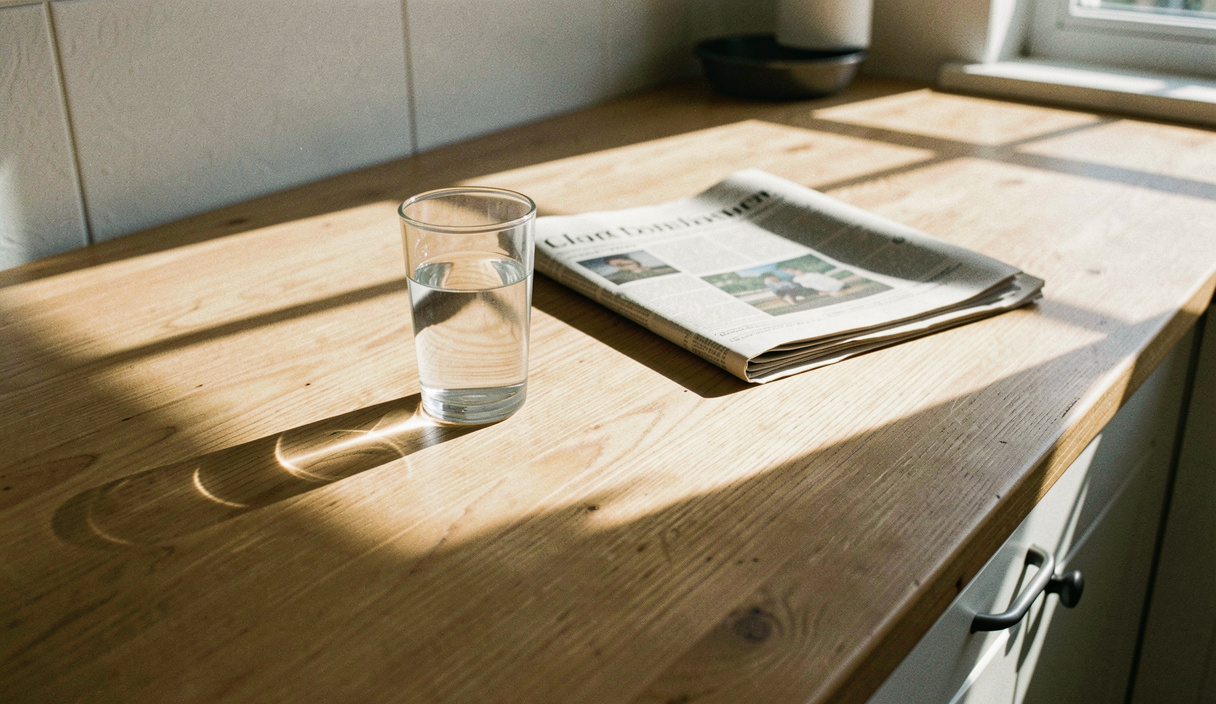
Late morning sunlight falling across a plain wooden kitchen table, a glass of water and a folded newspaper resting on it, the shadow of a window frame drawn over the grain

A daily magazine of small habits

A day is not built out of resolutions. It is built out of the same ten minutes, done again.
The Steady Day is written around the ordinary hours: the hour before bed, the walk after lunch, the height of a screen, the glass of water that never gets drunk, the lamp that stays too bright at eleven at night. These are the parts of a day that repeat, and because they repeat they end up shaping it.

We write in seven sections, one for each of the habits we keep coming back to. Every piece is observational: what the habit looks like in practice, what usually gets in its way, what the smallest workable version of it is, and what we noticed when we kept notes on it in our own week. Nothing here is prescribed and nothing is measured for you.

The chapter ring

Seven sections, seven parts of the same day

Each section keeps its own colour, its own pace of publication and its own way of asking the question. Sleep is about the hour before, not the eight hours after. Movement is about distance you already walk. Nutrition is about the meal you do not have to decide on.

The arc of the day

Latest entries

Published in the order they were written, newest first. Each entry names the section it belongs to, so a reader who came for sleep can follow the thread across into light, rooms and routines without going back to the front page.

20/08/2026

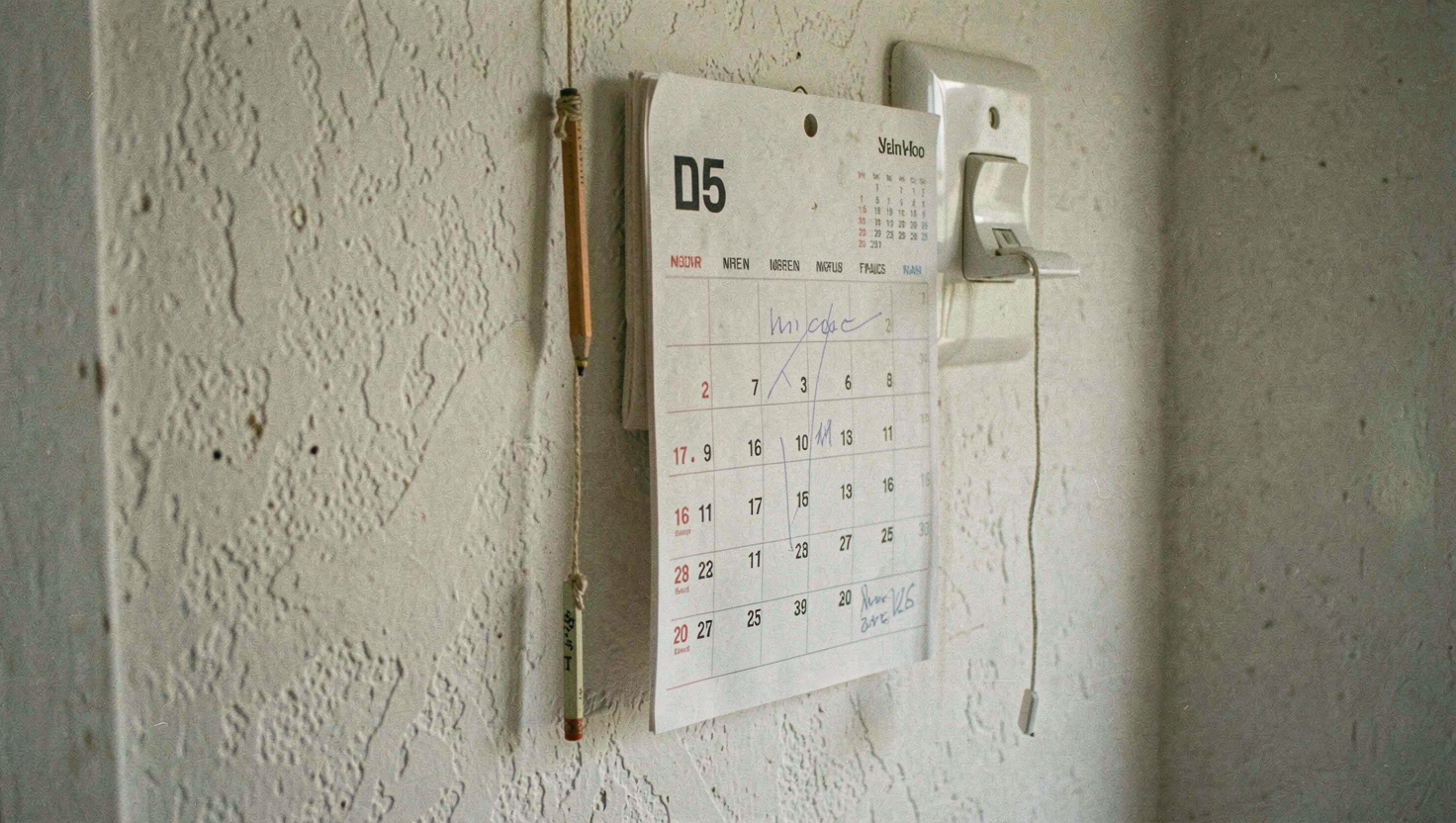
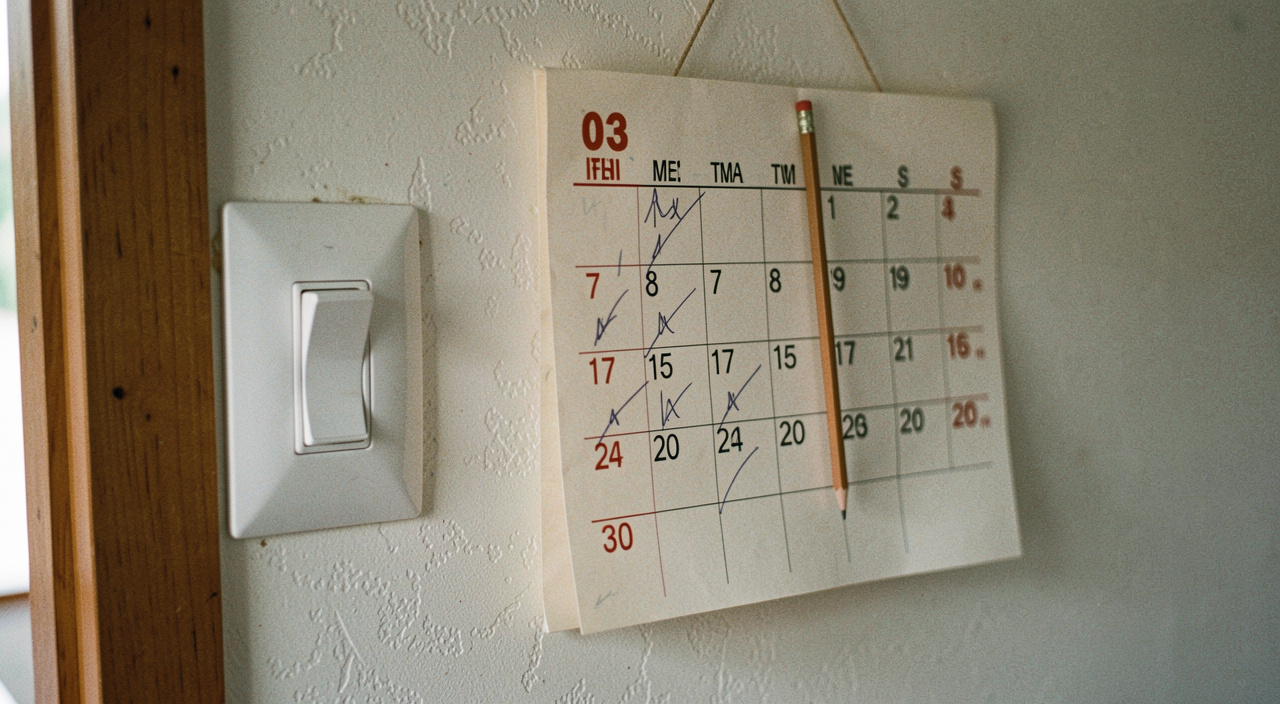
A paper wall calendar hanging beside a light switch with pencil ticks on several days, a stub of pencil on a string
Habits & Routines

Tracking Habits Without Obsessing Over Streaks

A streak turns the count into the object, and then the habit gets performed in whatever degraded form keeps the count alive. A tick, an index card that expires at the end of the month, and no total anywhere.

18/08/2026

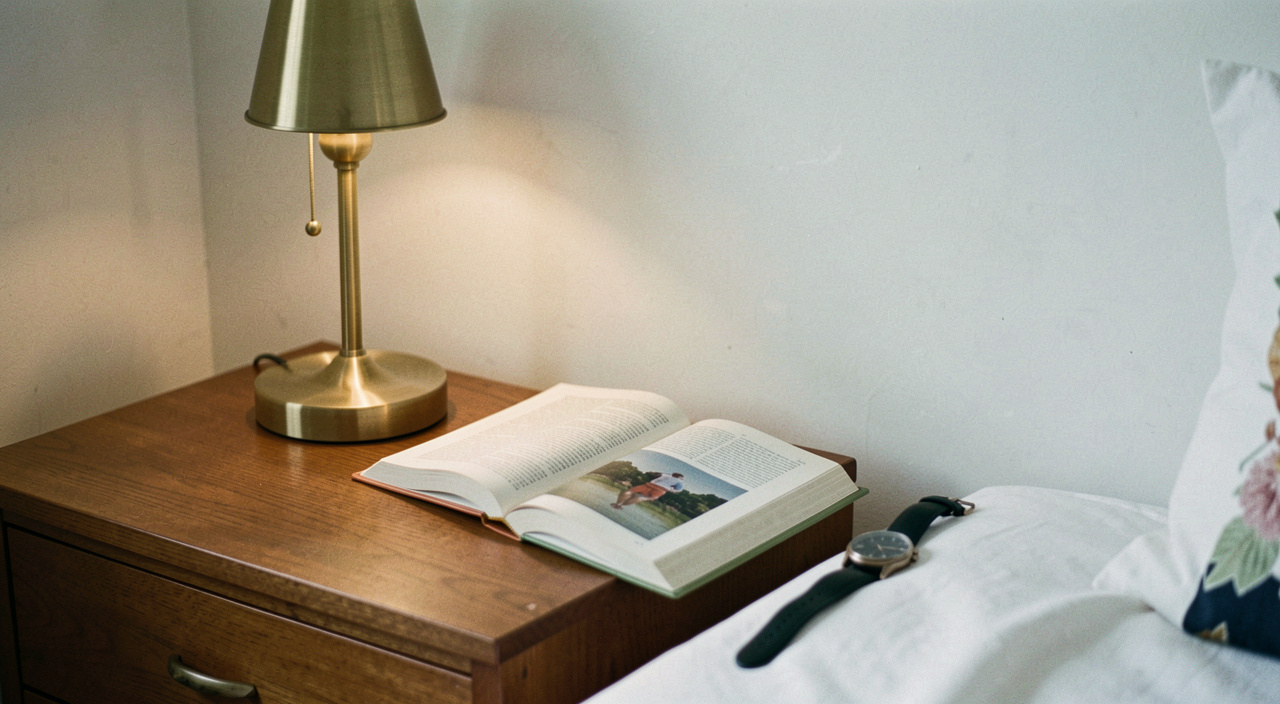
A small brass bedside lamp switched on beside an open paperback and a wristwatch face down on a nightstand
Sleep & Rest

The Last Hour Before Bed

Most of what gets called a sleep problem happens while the person is still awake. For two weeks we wrote down what the hour before bed actually contained, and the answer was almost always the same three things.

18/08/2026

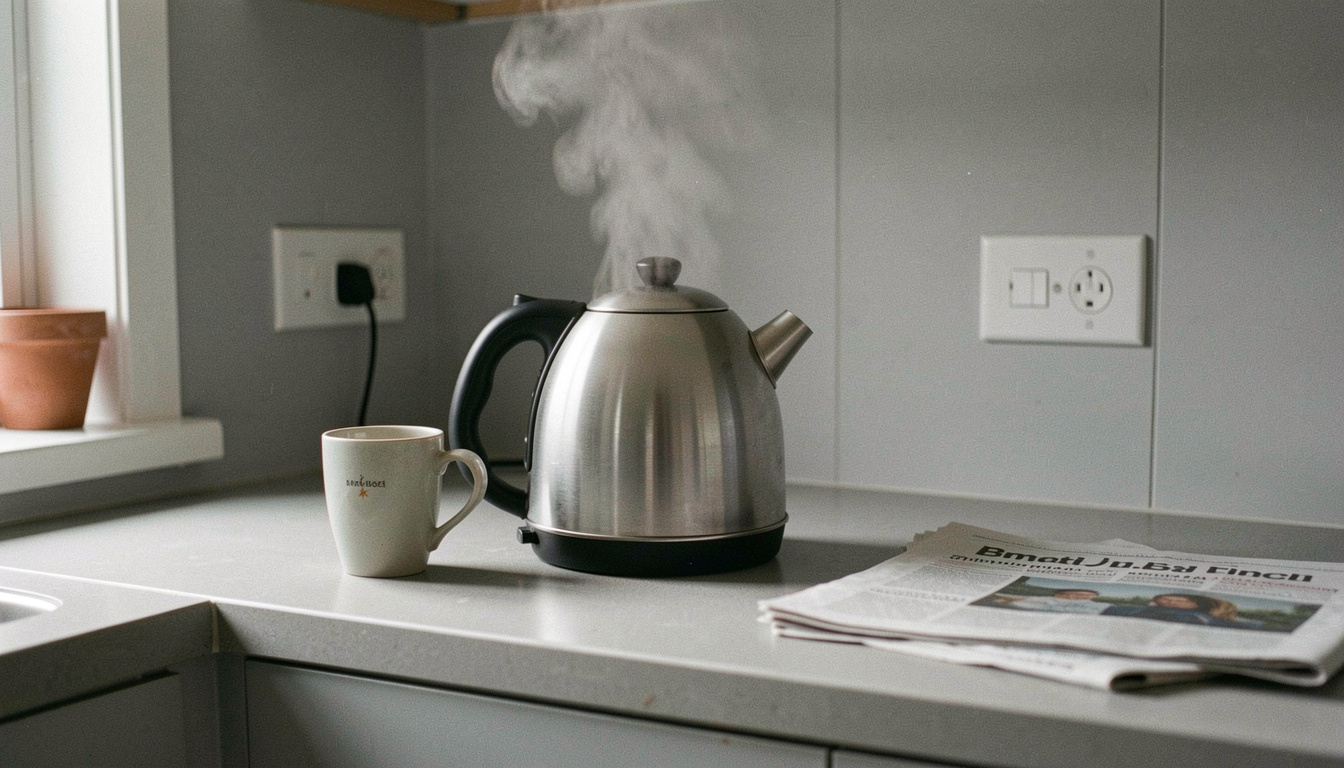
A kettle steaming on a kitchen worktop in flat grey morning light, a single mug beside it and an unopened newspaper along the counter
Habits & Routines

Morning Routines That Survive the Bad Days Too

Most morning routines are designed on a good morning by a person with time. The mornings they need to work on are the other ones. Decide the floor in advance, in writing, on a good day, and then halve it.

16/08/2026

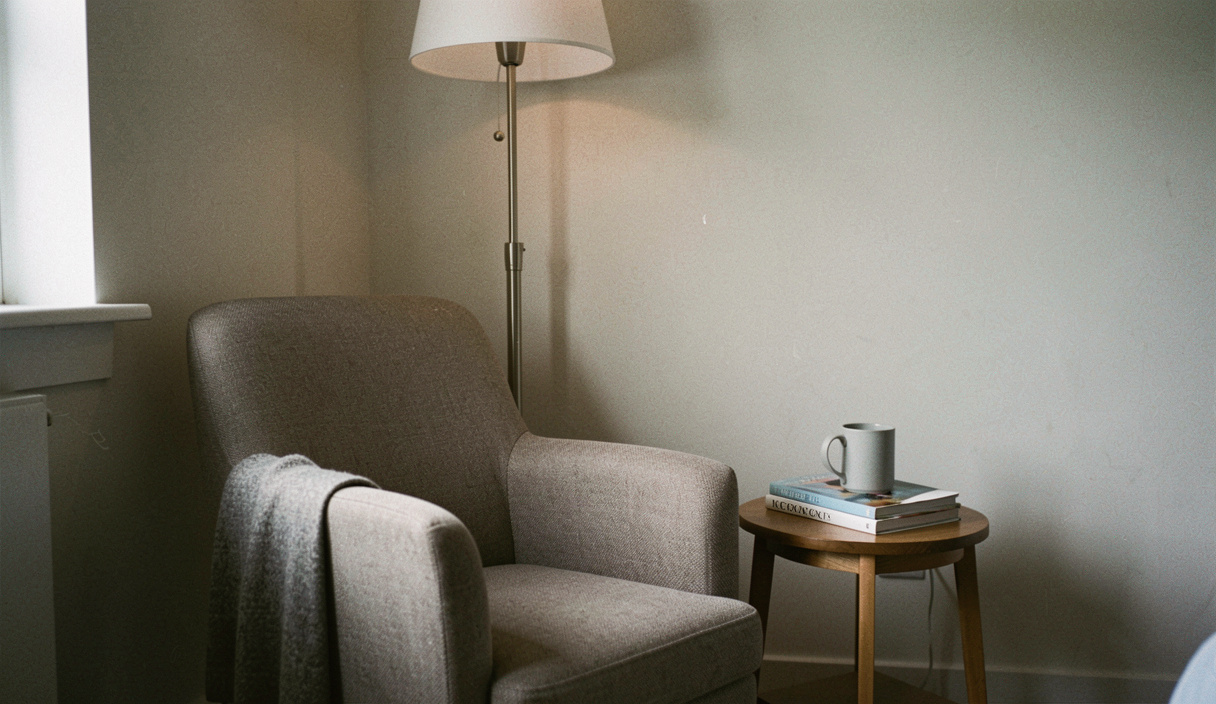
A low armchair in the corner of a room with a floor lamp behind it and a small side table holding a mug and a paperback
Home & Environment

Creating a Quiet Corner for Rest in a Small Home

A chair, a lamp and a surface big enough for a cup, arranged deliberately, somewhere that is not the desk and not in front of the television. No work in it, no charger in it, no storage in it. That is the entire specification.

13/08/2026

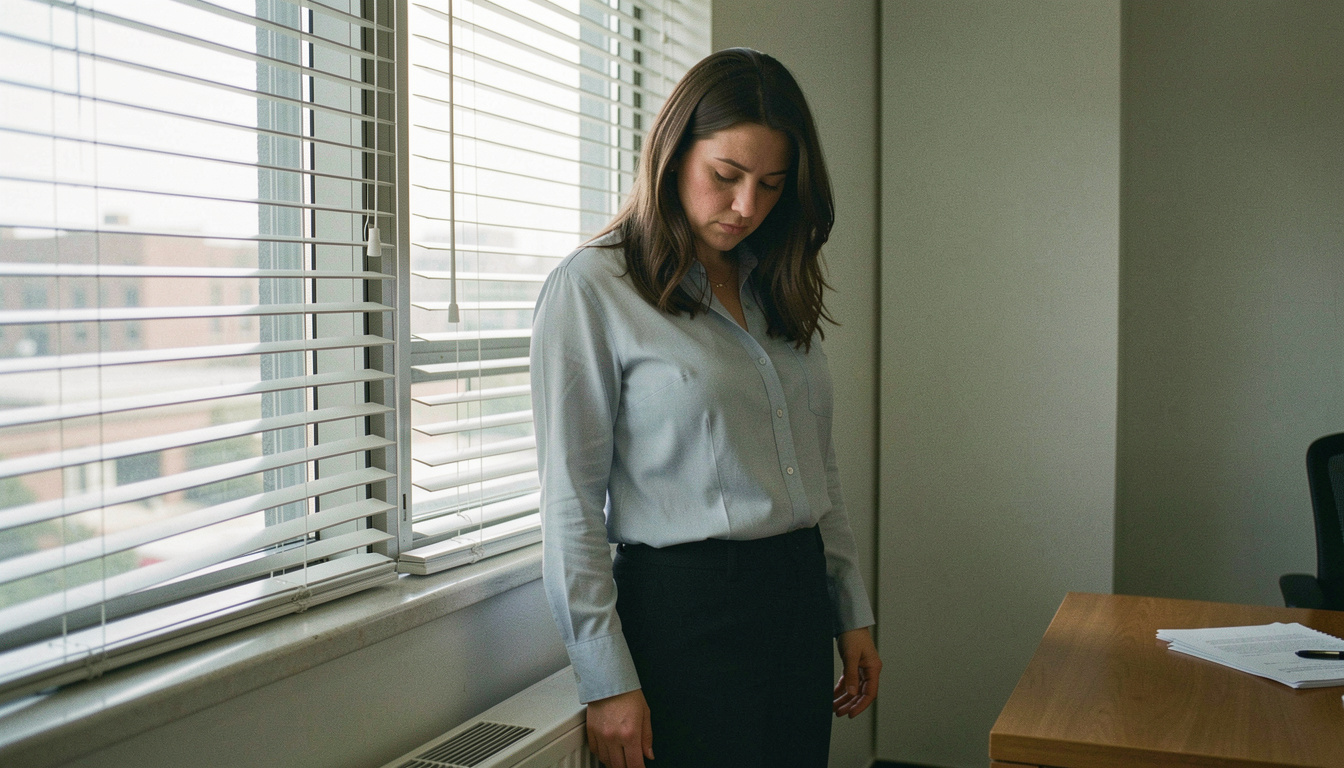
A woman standing at an office window with her shoulders visibly dropped and her arms loose at her sides, blinds half open
Stress & Calm

Noticing Where Stress Sits in the Body

Held tension stops being noticeable long before it stops being present. Shoulders raised at ten in the morning are simply where the shoulders are by noon. The habit is a short, repeated check rather than a relaxation exercise.

10/08/2026

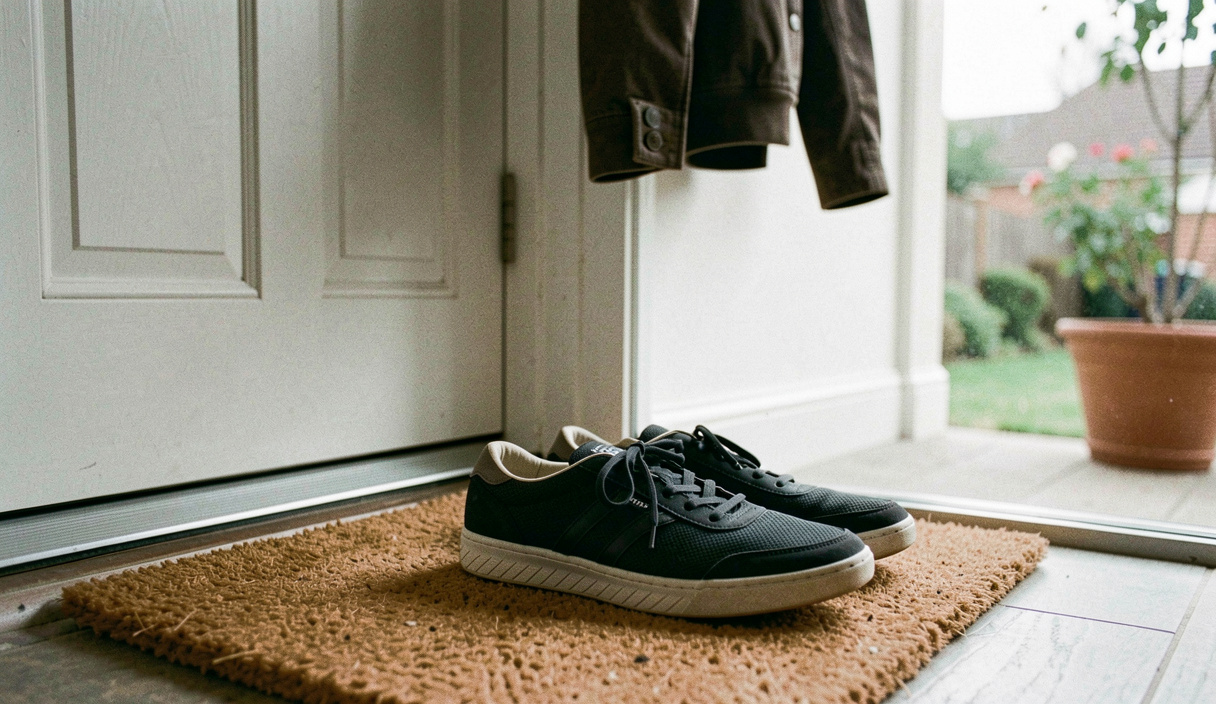
A pair of trainers set out neatly on a doormat by a front door with a jacket on the hook above them
Habits & Routines

The Two Minute Rule for Starting New Habits

Define a new habit as the version of itself that takes two minutes, and treat that version as the habit rather than a warm up. The point is not the two minutes. The point is that starting stops being something you decide about.

07/08/2026

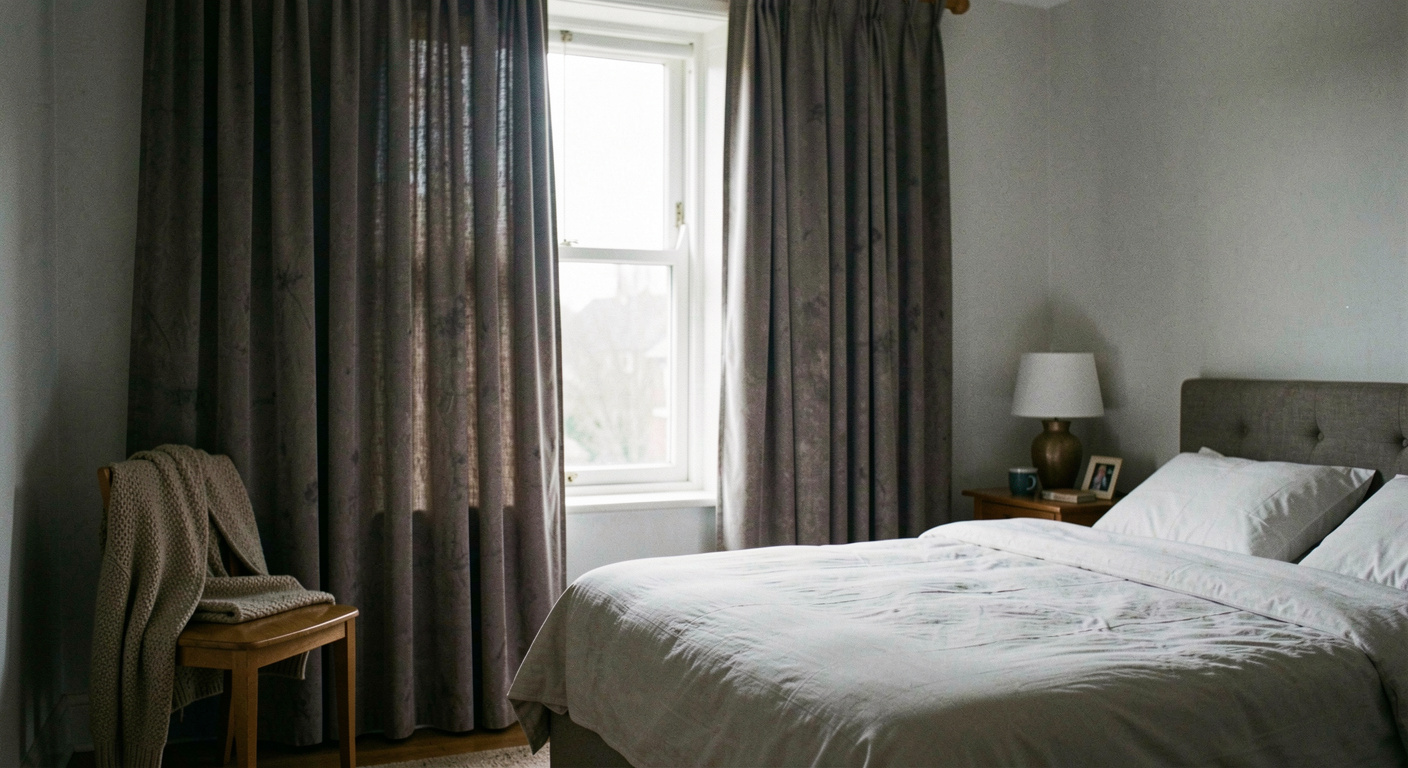
A bedroom with heavy curtains pulled fully open onto a bright grey morning, a made bed and a chair with a jumper over it
Home & Environment

How Natural Light at Home Shapes Daily Mood

Most flats have more daylight in them than the people living there ever use. It arrives when nobody is in the room and lands on a wall rather than on a chair. The fix is furniture, and it costs nothing.

01/08/2026

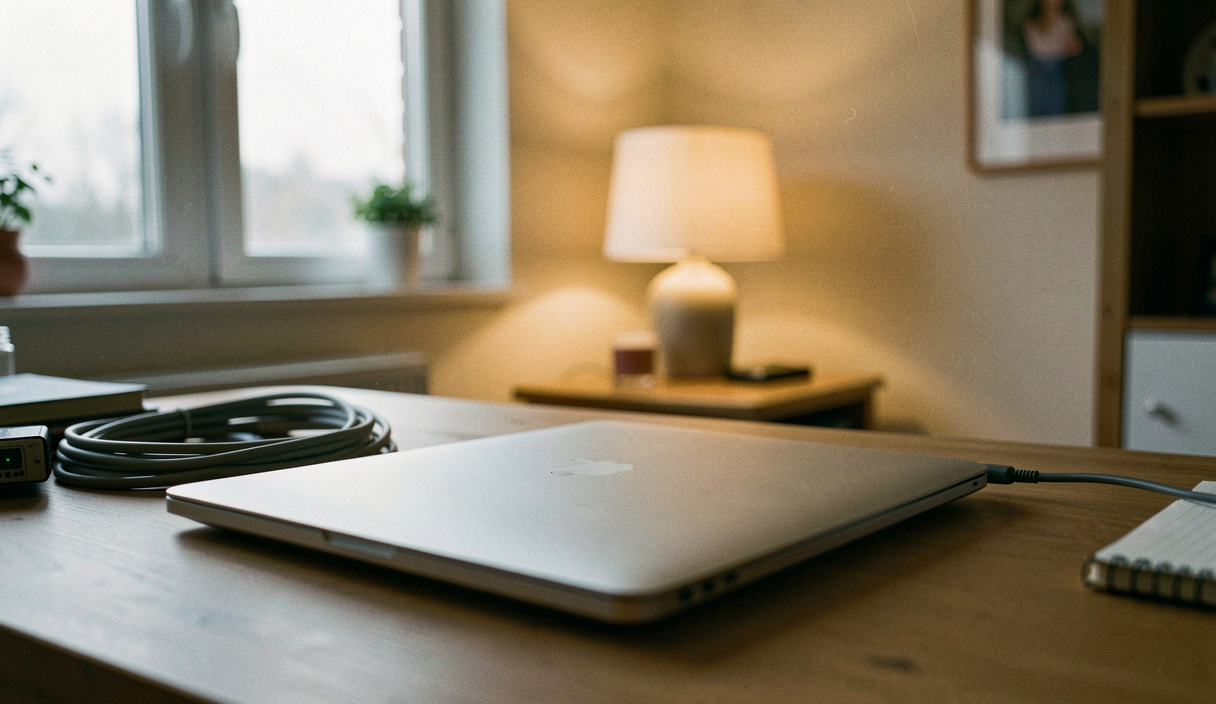
A closed laptop on a home desk in the evening with a cable coiled beside it and one lamp lit at the far side of the room
Stress & Calm

Setting Boundaries With Your Own Evening

An evening spent half working is neither restful nor productive, and afterwards nobody can say which it was. Deciding to stop at seven does nothing. Closing a lid, pushing a chair in and moving a bag does quite a lot.

28/07/2026

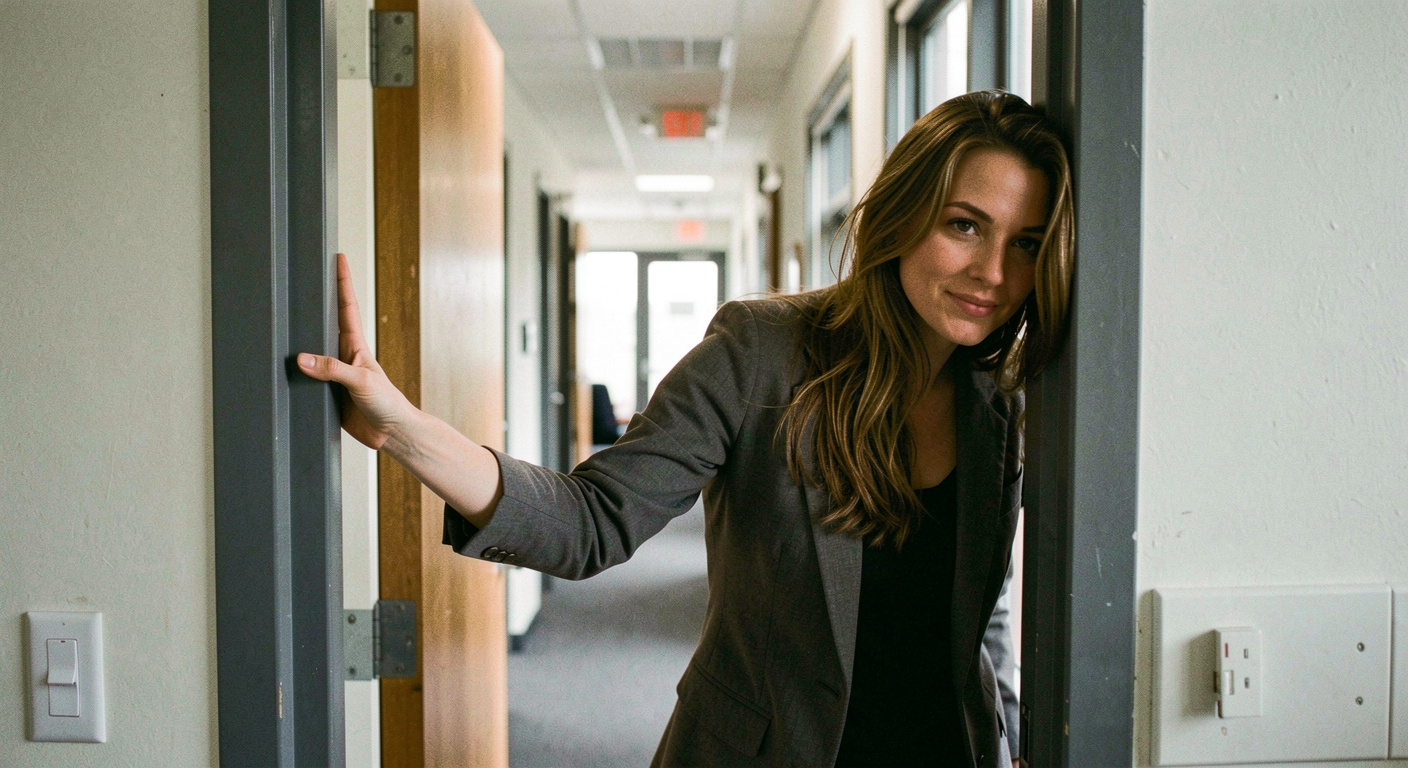
A woman standing in an office doorway with one forearm against the frame, leaning gently forward, a corridor behind her
Desk & Posture

Simple Stretches for People Who Sit Most of the Day

Most routines written for desk workers assume a mat, a change of clothes and ten minutes. What exists between two meetings is ninety seconds, standing up, in the clothes you are already wearing. Four movements fit in it.

20/07/2026

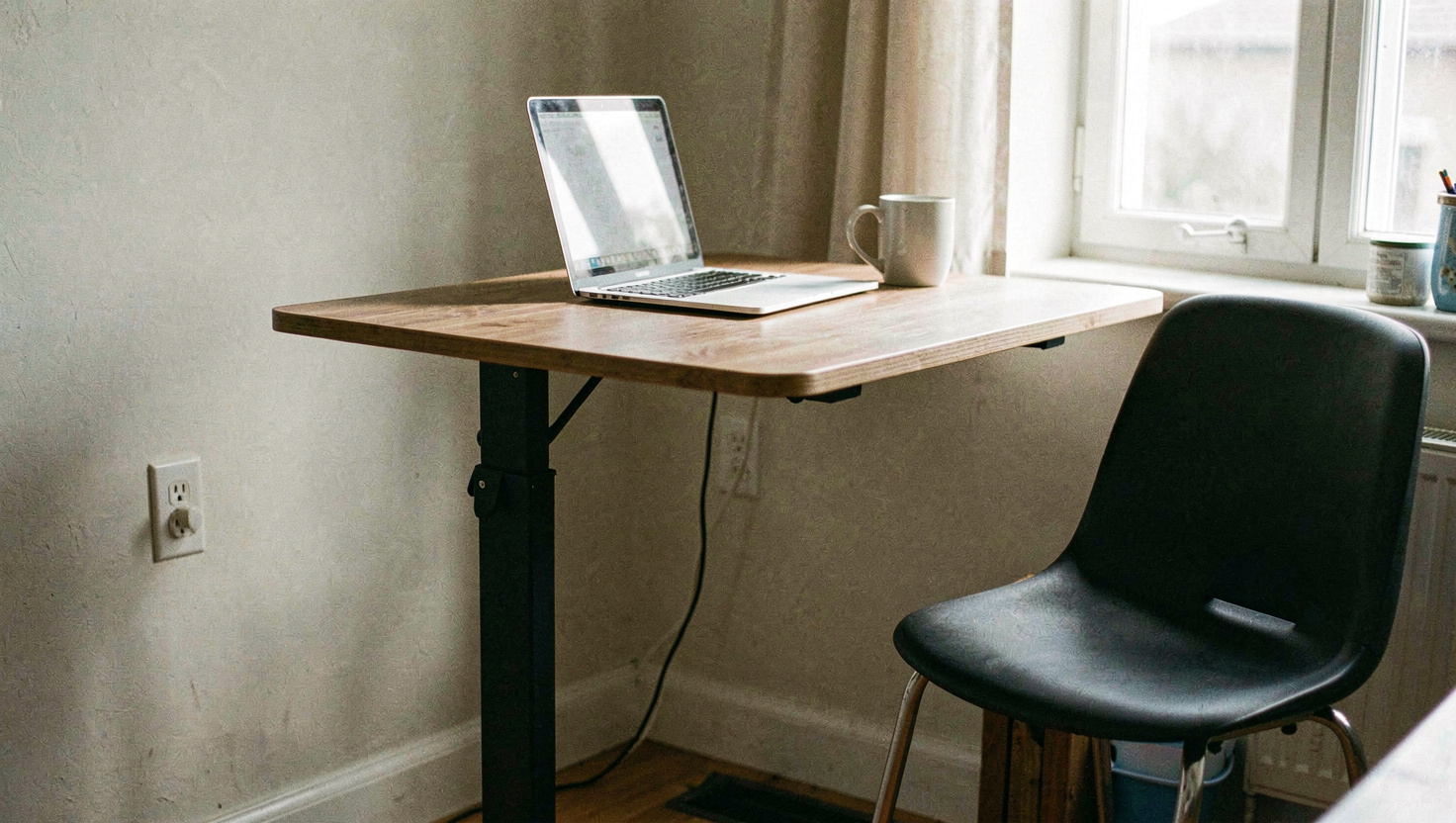
A sit stand desk raised to standing height in a home office in the morning, a laptop and a mug on it, an empty chair to one side
Desk & Posture

Standing Versus Sitting: Finding a Rhythm Through the Day

The body is not much interested in which posture you chose and very interested in how long you have held it. The habit was never standing instead of sitting. It is switching, and a switch needs an event rather than a timer.

18/07/2026

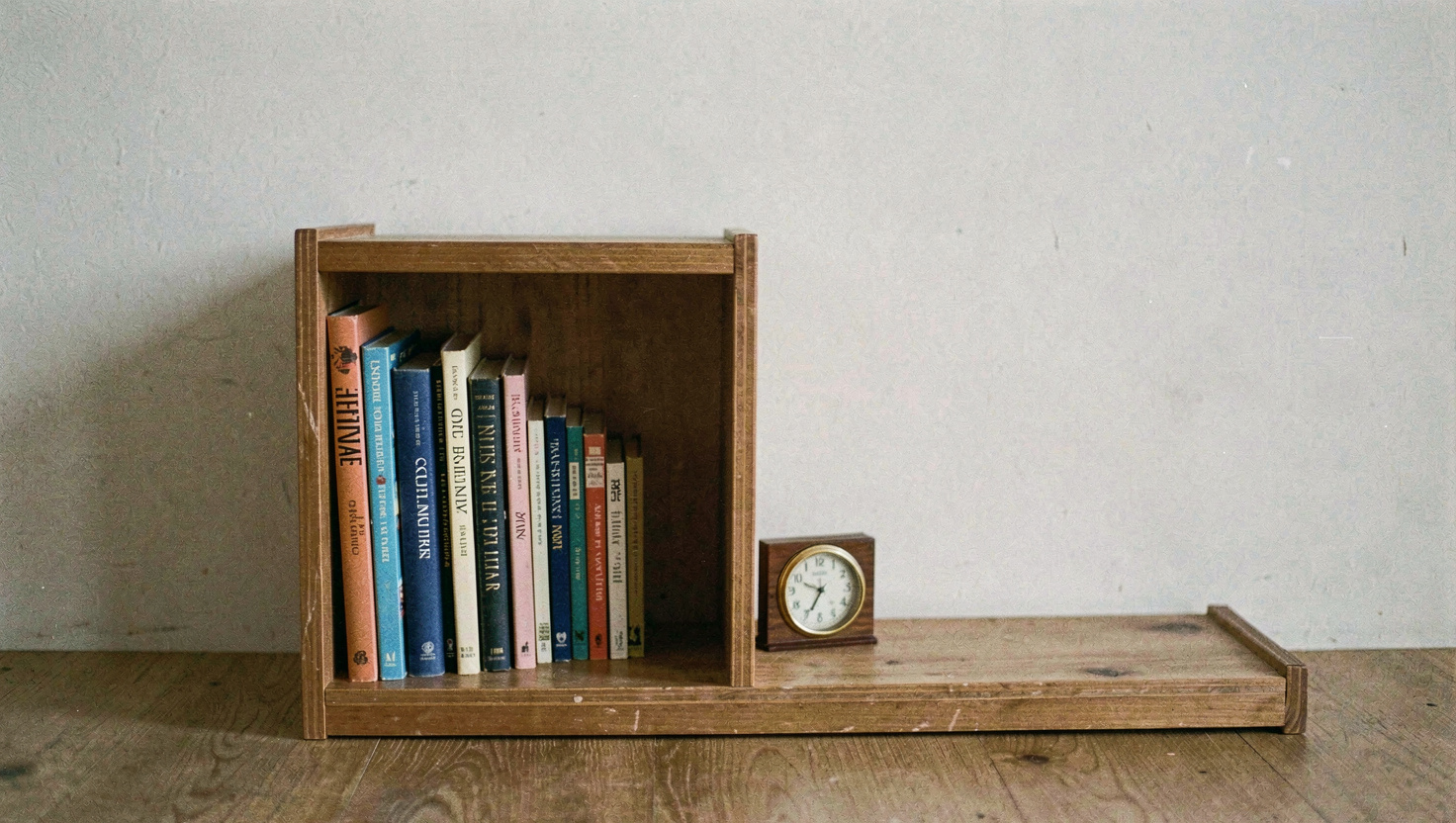
A single wooden bookshelf with books stood upright at one end, a small clock and an empty space at the other
Home & Environment

Decluttering One Shelf at a Time

Decluttering is usually planned as an event, so it waits for a free Saturday, and the waiting is where most of it stays. A shelf takes twenty minutes, ends in a finished shelf, and therefore gets done again.

16/07/2026

A bowl of thick vegetable soup on a wooden table with a spoon resting against the rim and a torn piece of bread beside it
Everyday Nutrition

Eating Slower: Why It Matters More Than What's On the Plate

The only food habit that changes nothing about what you buy, cook or spend. A meal eaten in four minutes at a worktop and the same meal eaten in fifteen at a table are, in every way anyone notices afterwards, two different meals.

12/07/2026

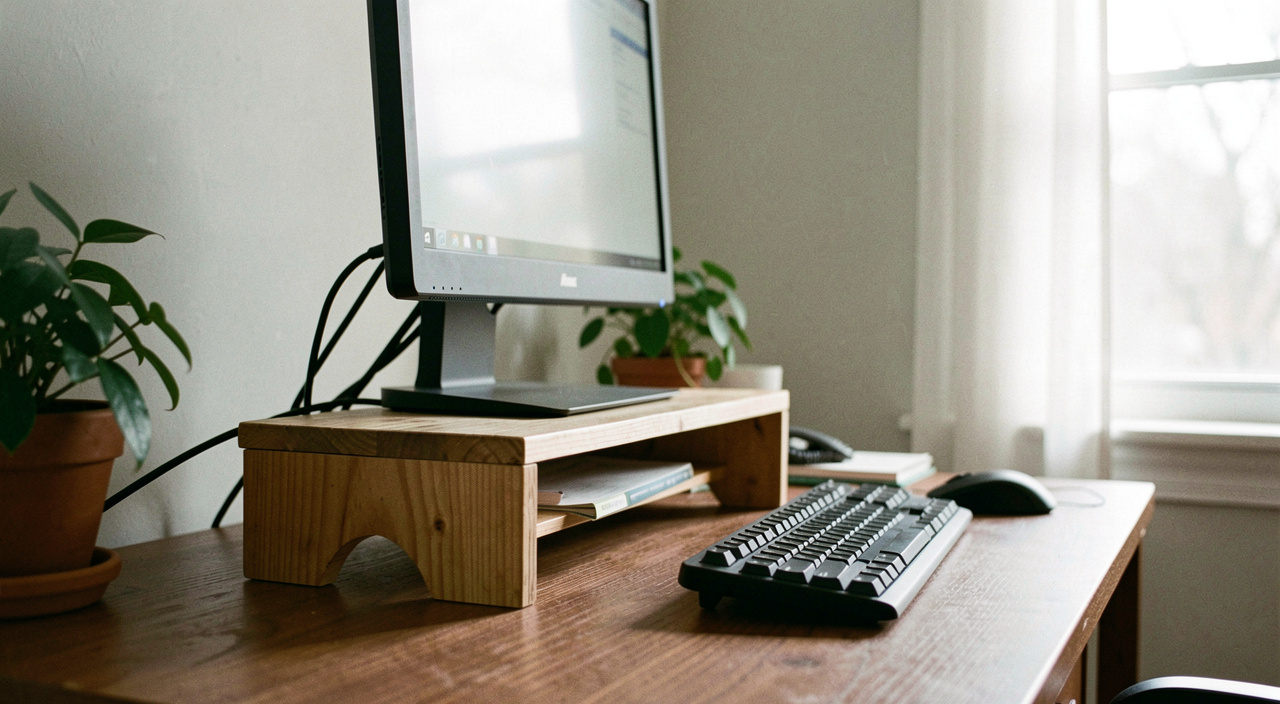
A home desk photographed from the side, a monitor raised on a wooden riser, a keyboard in front of it and daylight from a window
Desk & Posture

Setting Up a Desk That Doesn't Hurt by 3pm

Nothing about a workstation is revealed in the first hour. Judge it at three in the afternoon, then change one thing at a time, working upwards from the floor: feet, chair, desk surface, screen.

12/07/2026

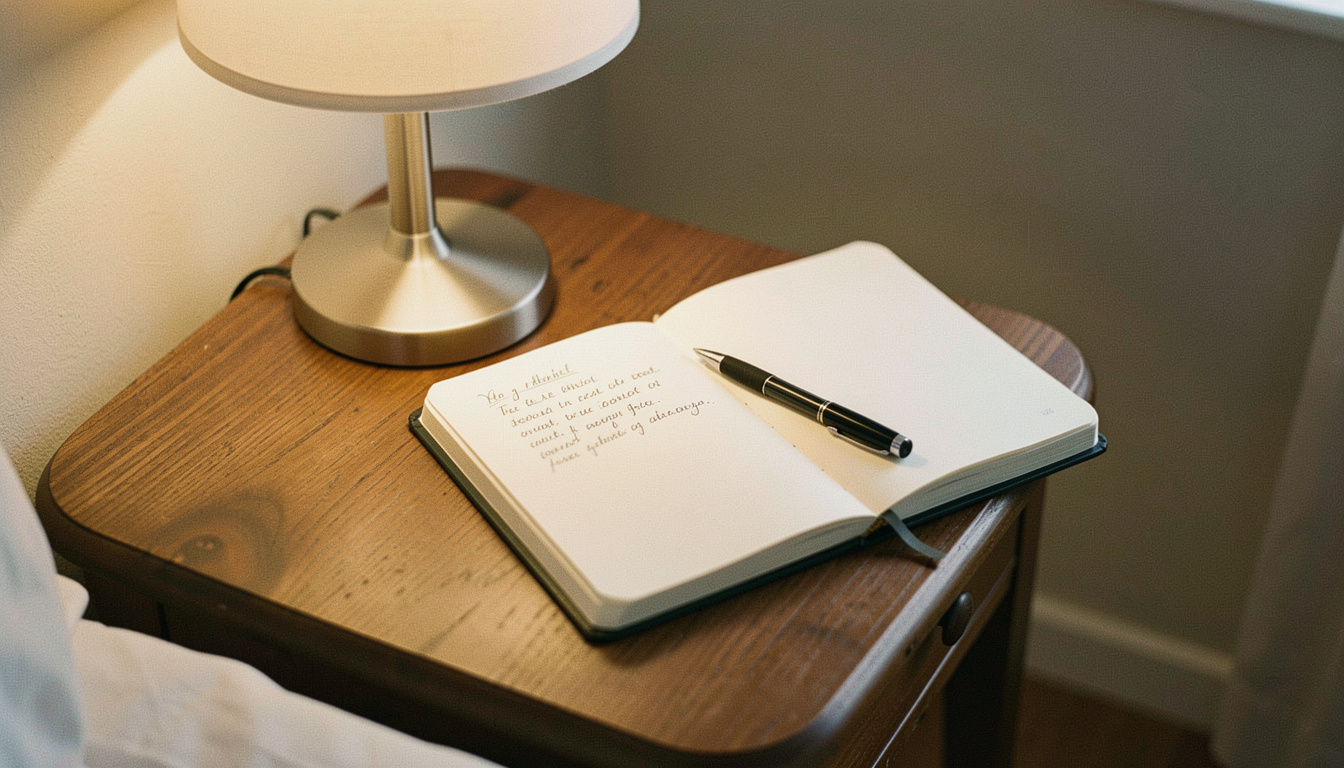
A small hardback notebook open on a side table under a warm lamp, a few lines of handwriting on the page and a pen across it
Stress & Calm

What Five Minutes of Journaling a Day Can Do

The word journaling does the habit no favours. Three sentences, written standing up in a kitchen, taking about as long as boiling a kettle: what took up the day, what is still open, and one thing that was fine.

08/07/2026

A shopper holding a cardboard packet at arm's length in a supermarket aisle, shelves of boxes stretching away behind her
Everyday Nutrition

Reading Food Labels Without Overthinking Every Number

A supermarket is an unusually bad place to do arithmetic. Ten seconds, the ingredient list rather than the front of the box, and the first three words, which carry most of the information because the list is written in order of quantity.

04/07/2026

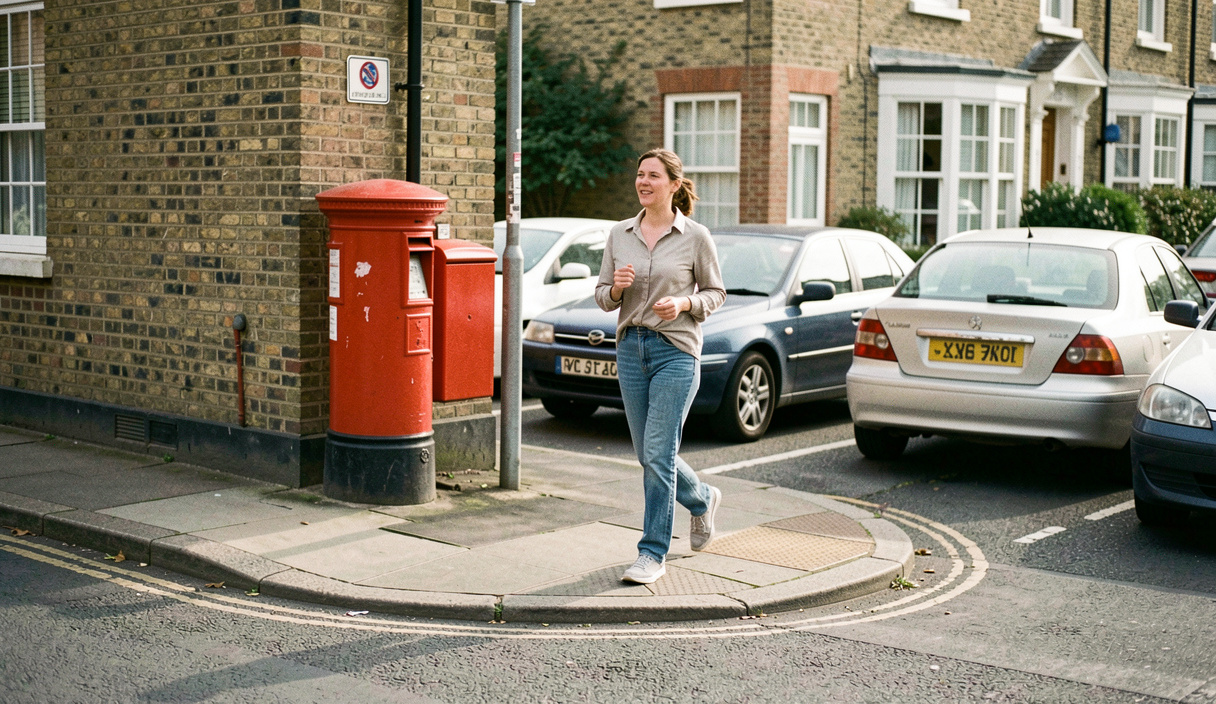
A residential street corner in mid morning with a woman rounding it at an easy pace, a red postbox and parked cars behind her
Movement & Walking

Short Walks Versus Long Walks: What Each One Does

Two people can walk the same total minutes in a week and have completely different weeks. Short walks break up a working day. A long walk empties two hours of it. Make the short ones the habit and the long one the event.

30/06/2026

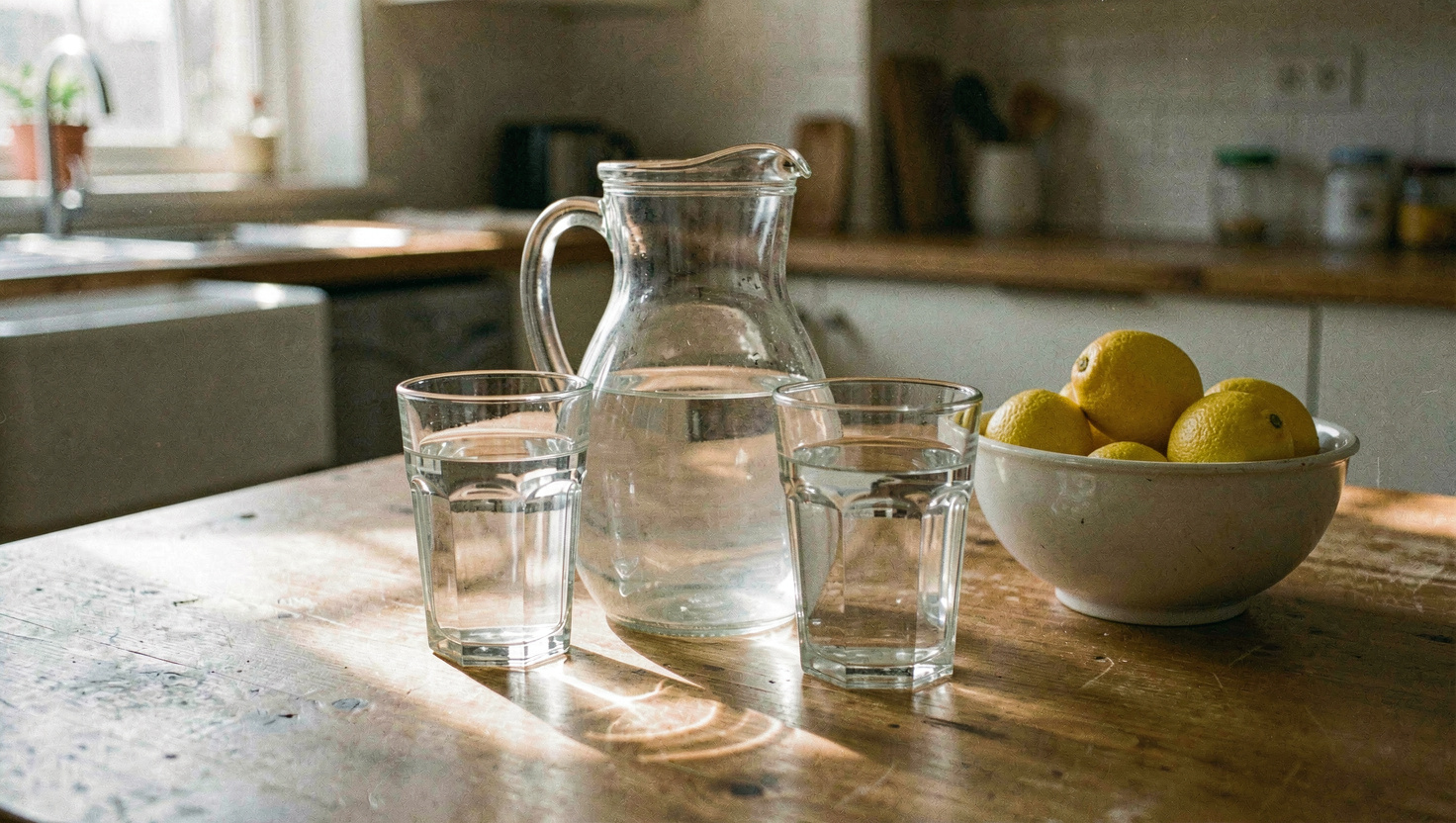
A plain glass jug of water and two tumblers standing in the middle of a kitchen table beside a bowl of lemons
Everyday Nutrition

Hydration Habits That Actually Stick Through a Busy Day

The habit does not fail because it is difficult. It fails because it is counted, and counting is the first thing a busy day throws overboard. Cues survive where quotas do not: a jug on the table, a glass while the kettle boils.

26/06/2026

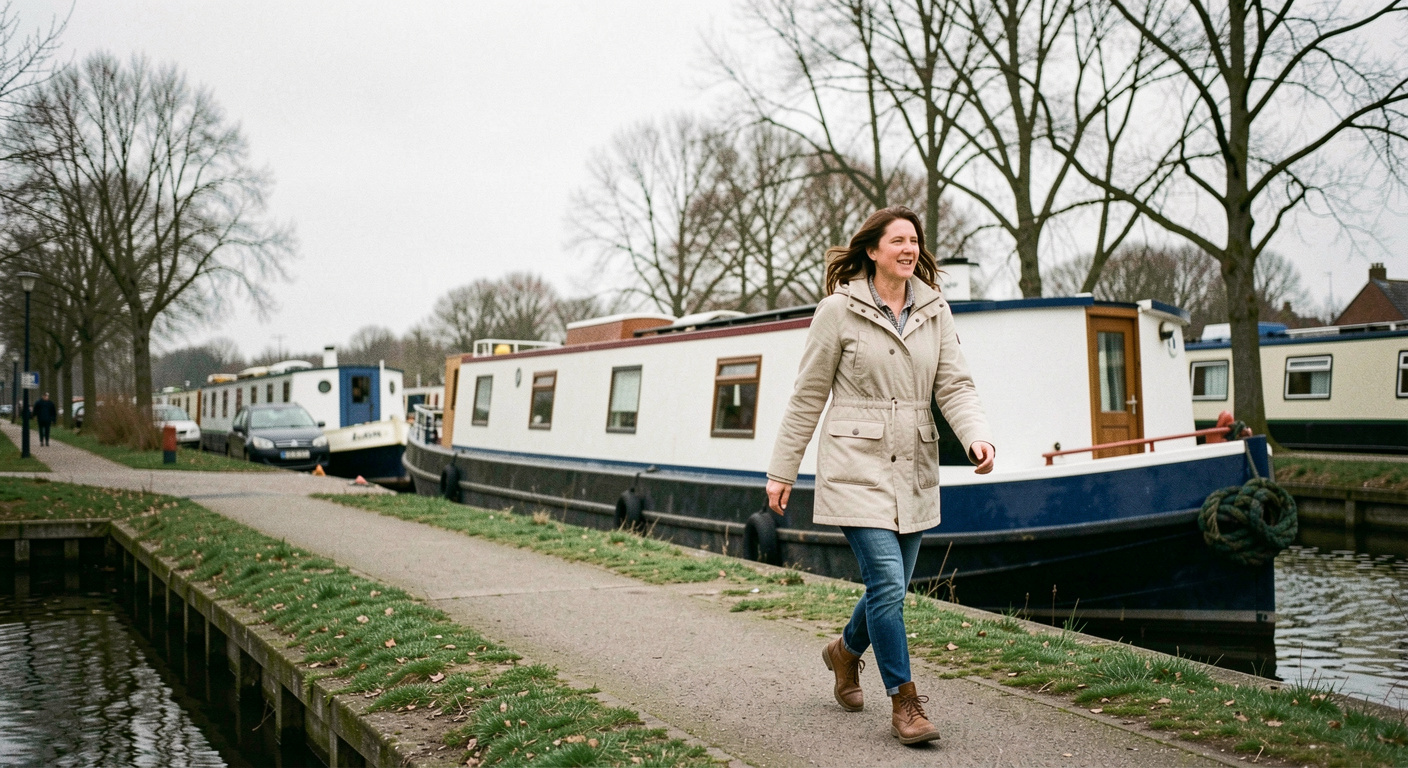
A woman walking quickly along a canal towpath in a light jacket, a narrowboat and bare trees behind her under a flat grey sky
Movement & Walking

How Walking Pace Relates to Daily Energy Levels

A slow walk and a brisk walk are two different habits that happen to use the same pavement. They are not points on a scale, they do different jobs, and picking the wrong one for the moment is the usual mistake.

24/06/2026

A man standing still on an office stair landing with one hand on the rail, a fire door and a strip window behind him
Stress & Calm

Box Breathing for Busy, Overwhelming Moments

Four counts in, four held, four out, four held. The numbers are not the point. Half of what this does is the breathing and the other half is having something specific and boring to do with the minute before something difficult.

22/06/2026

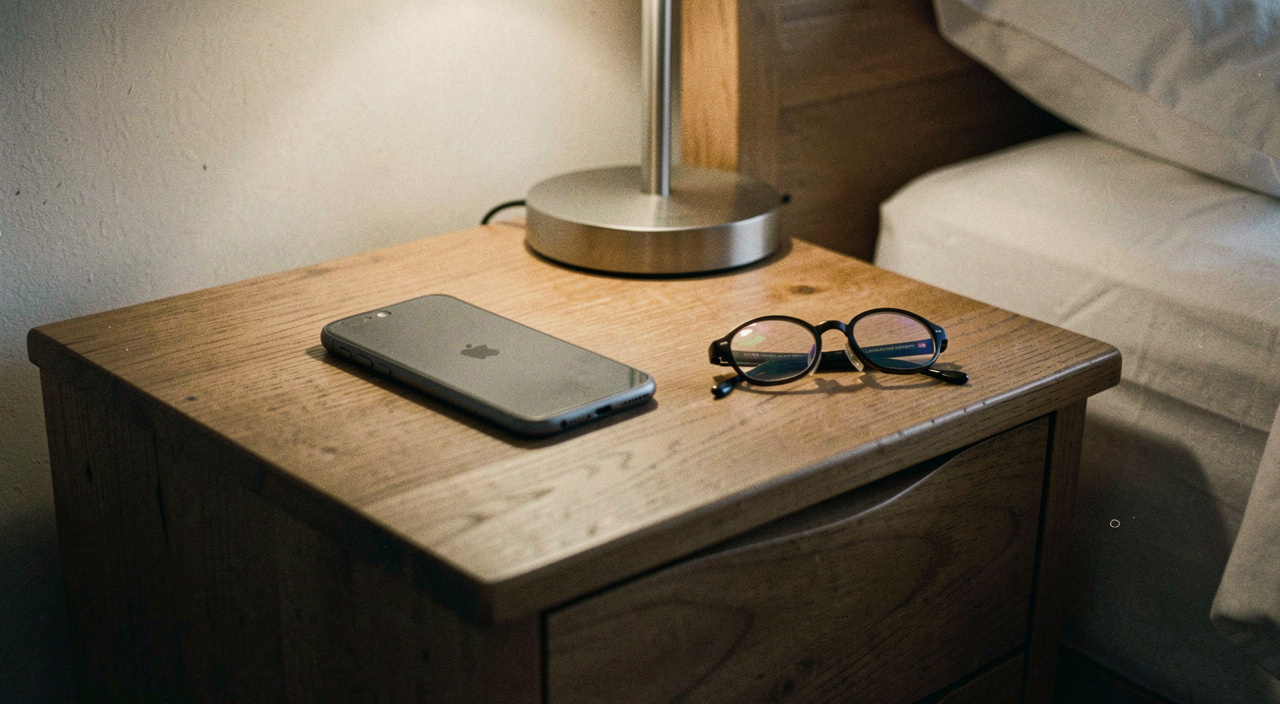
A phone lying face down on a wooden nightstand next to a folded pair of reading glasses, the room lit only by a low lamp
Sleep & Rest

What Actually Changes When You Put Screens Away Before Bed

The advice is familiar to the point of being invisible. What is rarely described is what actually happens: the hour becomes long, the room's own light becomes adequate, and the reflex of reaching for it has nothing to reach for.

18/06/2026

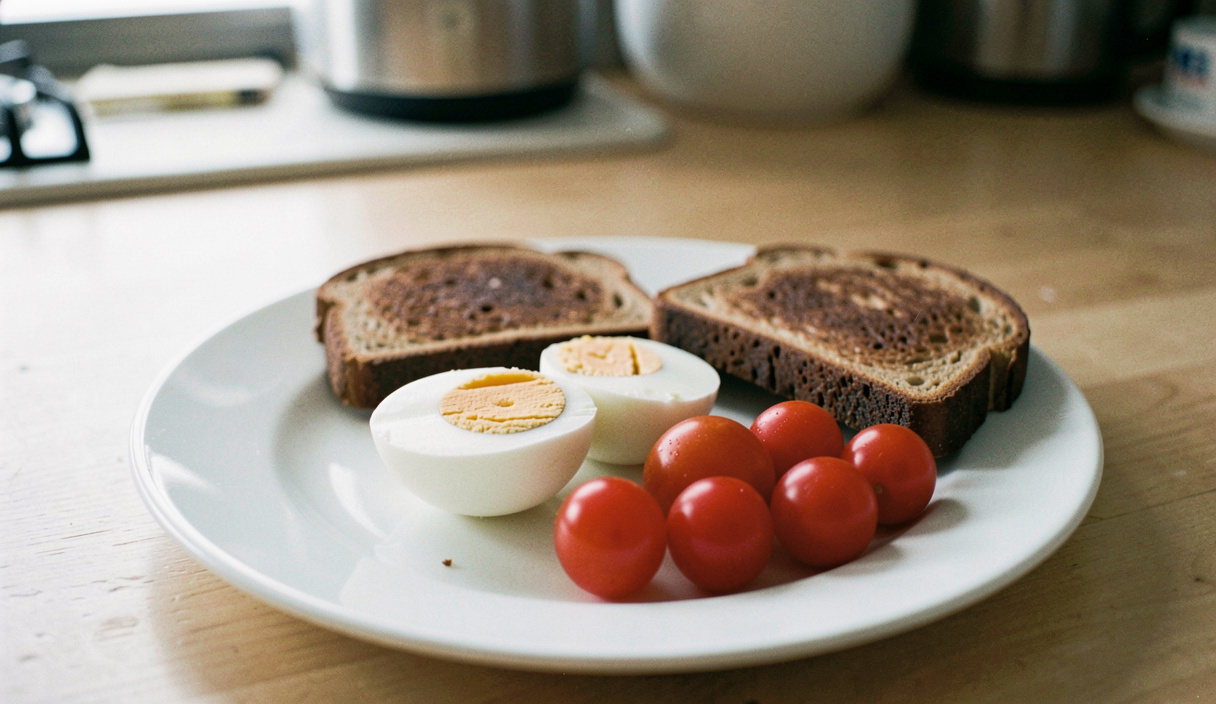
A plain white plate on a kitchen table holding a boiled egg cut in half, two slices of dark toast and a handful of cherry tomatoes
Everyday Nutrition

Building a Simple, Balanced Breakfast Plate

A breakfast that has to be invented at seven in the morning gets skipped. Four slots, one shelf at eye level, and three assemblies dull enough to be repeated: the template matters more than the recipe.

14/06/2026

A man in shirtsleeves sitting on a low wall outside an office building in mid afternoon sun, a paper cup beside him
Sleep & Rest

How Afternoon Light Exposure Shapes Your Sleep Quality

An indoor afternoon supplies almost no information about where you are in the day. Ten minutes outside, or at a window, is the smallest possible correction, and it is easiest to keep when it is attached to something that already happens.

10/06/2026

Two colleagues walking along a pavement beside a glass office building just after midday, jackets left behind, one carrying a paper cup
Movement & Walking

The Ten Minute Walk After Meals Habit

Ten minutes is too short to feel like exercise and too long to be nothing, which is exactly why it survives. We look at why a loop beats a destination, and at the three ways the habit usually dies in its second week.

02/06/2026

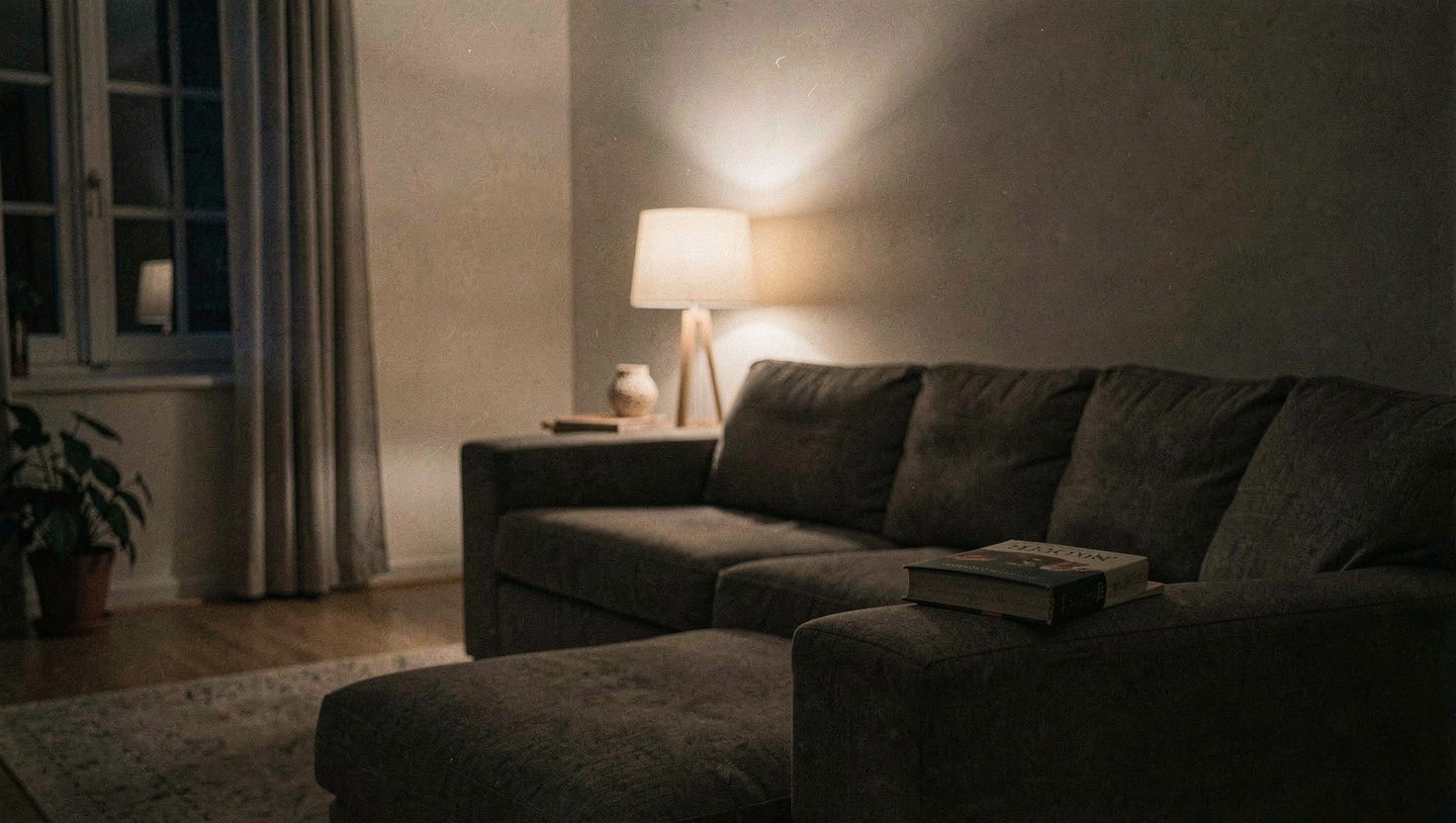
A living room after nine at night lit by one low table lamp, the ceiling light switched off, a book face down on the arm of a sofa
Sleep & Rest

A Simple Wind Down Routine for Better Sleep

A wind down routine has almost nothing to do with sleep and almost everything to do with sequence: light down, screen away, body slowed, room reset. The individual actions are unremarkable. The order is the whole thing.

The Habits & Routines section gathers the entries that cut across all of the above, including the one on keeping a routine going on the days it is hardest to keep, which is the question every other section eventually runs into.

The equation of time

What this magazine is

A sundial is corrected by a small table called the equation of time. This section is ours: the plain statement of what The Steady Day sets out to do and how the writing is done.

Register

Observational and general. We describe habits, the mechanisms usually given for them, and what we noticed while keeping notes ourselves.

Scale

Small. The unit of this magazine is ten minutes, one lamp, one glass, one flight of stairs, one hour of the evening.

Cadence

Entries are dated and published in sequence. The date at the head of every piece is the date it was written.

Sections

Seven, listed above. A piece belongs to one of them and links to its neighbours where the subjects genuinely overlap.

Where to start

If you have read this far and want one place to begin, begin with the evening. Our piece on the last hour before bed sets out the habit that touches the most other habits, and it hands off naturally to the sequence of light, screen and room that gives that hour a shape, which costs nothing and is described step by step. Readers who would rather start with the middle of the day can go straight to the ten minute walk after a meal, or to the question of where the daylight in a home actually falls. The full account of our method is on the page about how this magazine is written, and the story of why it exists is on the about page.