Letting More Natural Light Into a Daily Routine
Most flats have more daylight in them than the people living there ever use. It arrives at hours when nobody is in the room, it lands on a wall rather than on a chair, and it is often behind a curtain that was drawn at nine the previous evening and stays drawn until eleven the next morning.
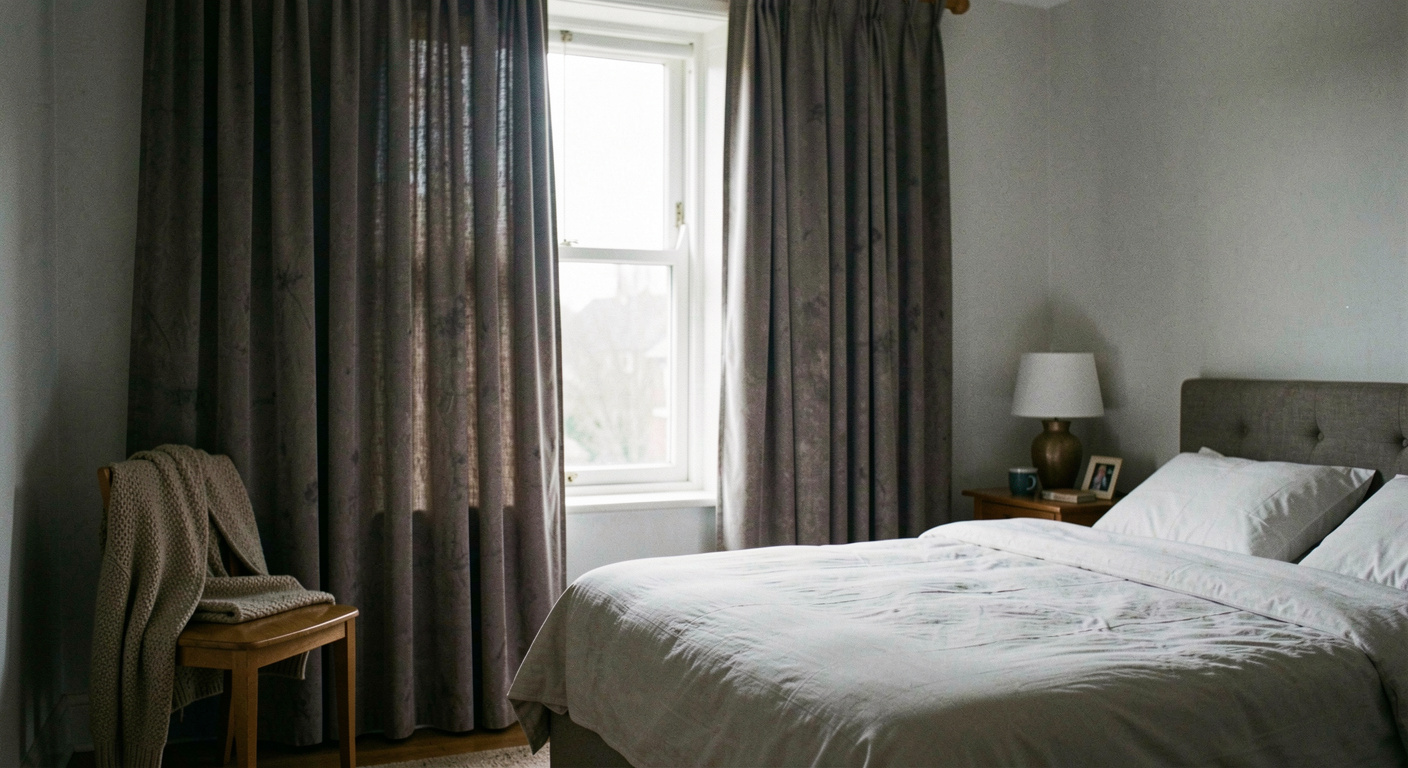
The flat that is never bright
Ask people whether their home is light and they will answer about the flat as a whole. The useful question is narrower: is the specific chair you sit in for two hours every morning light? Very often the answer is no, while a bright empty room sits on the other side of a wall.
This is a layout question rather than a building question, which is convenient, because layout is free to change and buildings are not. Nothing in this entry involves works, purchases or a landlord.
Curtains open earlier
The first and cheapest change is when the curtains go back. In winter this means opening them in the dark, which feels pointless at the time and stops feeling pointless around eight. In summer it means they are open before anybody is up.
A useful trick, which sounds trivial and is not, is opening them the night before in rooms that do not need privacy: a kitchen, a hallway, a bathroom with frosted glass. Then the light arrives before anyone has to make a decision, which is the same principle as moving a charger rather than resolving to use a phone less.
There is a well known connection between morning light and the timing of a day, which we treat separately, and the daytime version of the same habit is in the entry on afternoon light. What we can say here without stepping outside our own notes is that a room with the curtains already open is a room people get up in more willingly.
Move the chair, not the window
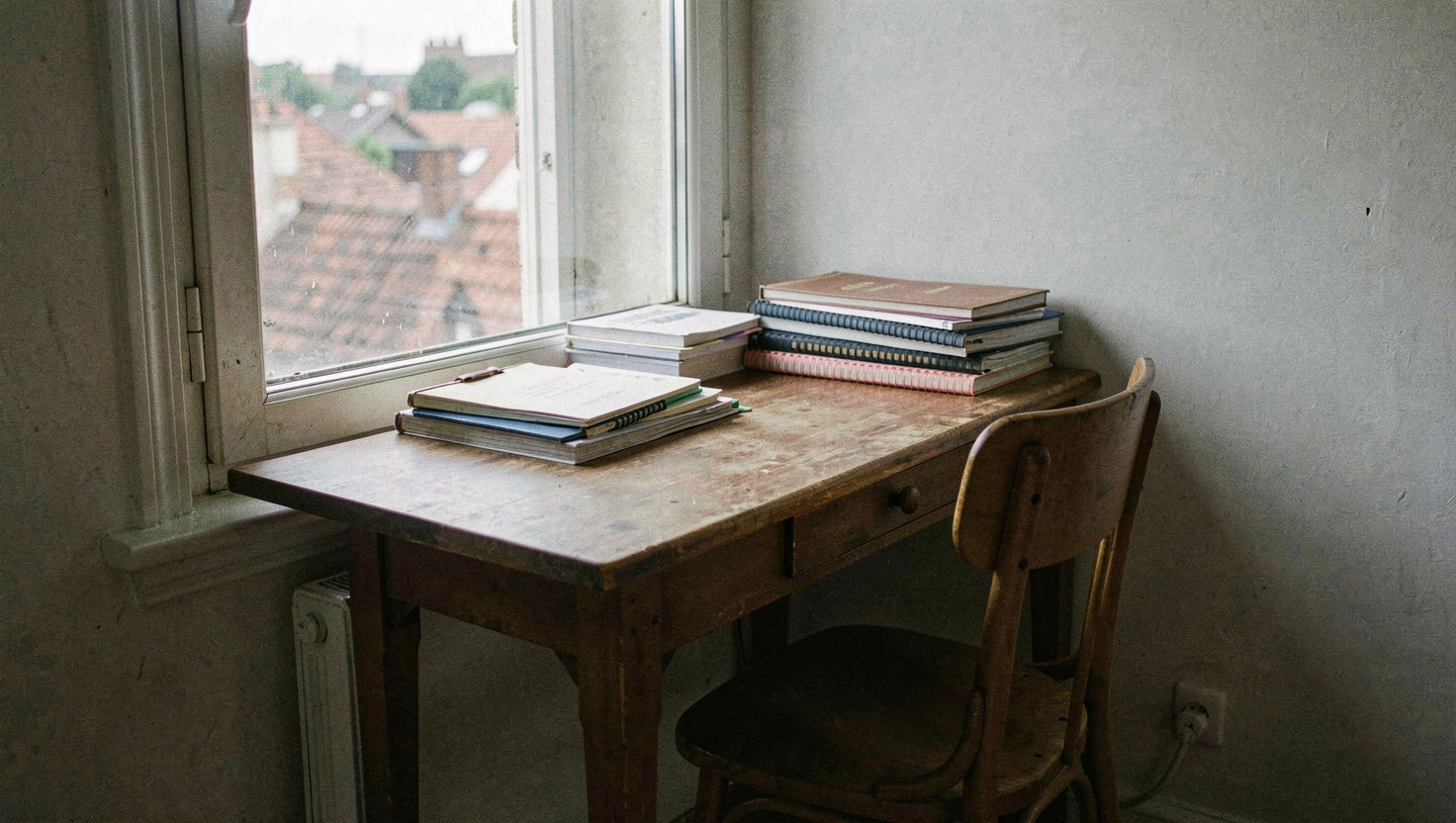
Light falls off quickly with distance from glass. A chair beside a window and the same chair two metres back are in different light environments, and the difference is far larger than it looks, because the eye compensates so smoothly that the darker position never feels dark.
So the practical move is furniture. The chair used most in the morning goes nearest the window. The desk turns ninety degrees so the window is to one side rather than behind the screen, which also solves the glare problem discussed in the entry on a desk that holds up through the afternoon. The reading chair goes where the afternoon sun lands rather than where the sockets are.
Two obstacles come up. The first is that the good position is occupied by something else, usually a table covered in things, which turns this into a twenty minute job of the kind described in our entry on the twenty minute shelf. The second is that the room was arranged around a television, and that is a bigger conversation than a magazine can have.
The eye compensates so smoothly that a dim corner never feels dim. That is why this has to be a decision rather than a preference.
Rooms by the hour
The exercise that produced the most useful result took about ten minutes and cost nothing: walking through the flat at three points in the day and noting which rooms were bright and which were not.
| Time | What to note | What it changes |
|---|---|---|
| Early morning | Which room gets the first light | Where breakfast is eaten |
| Early afternoon | Which surface is brightest | Where the desk or the reading chair goes |
| Late afternoon | Where the last light lands | Where the quiet corner belongs |
In our own flat the result was mildly embarrassing: the brightest morning room was the one used only for storage, and the darkest was where breakfast happened every day. Moving the breakfast table took four minutes and neither of us had thought of it in three years.
The evening half
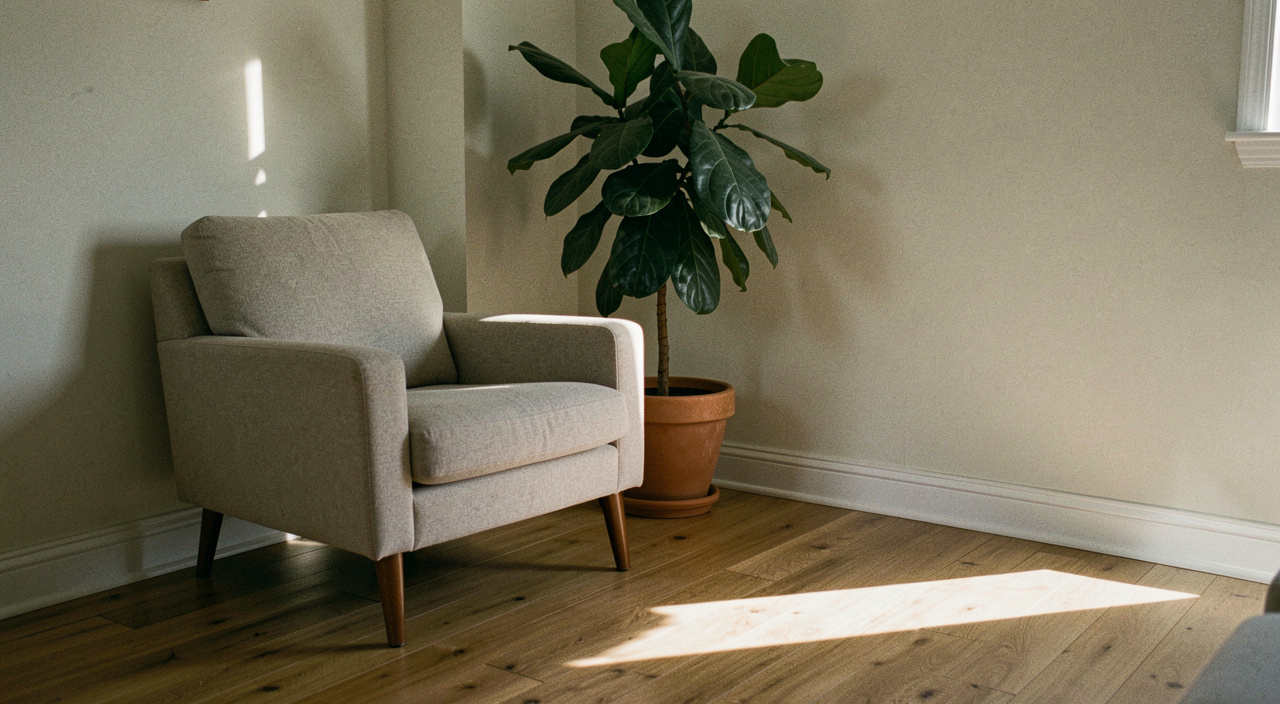
The other half of a light habit is subtraction rather than addition. After dark, the aim is not more light but less and warmer, and it is the one change on this site that is made once rather than repeated. A single lamp instead of a ceiling fitting is the first step of the sequence in the entry on giving an evening a sequence, and it costs two seconds a night once the lamp exists.
Kitchens and bathrooms are the rooms where this is least often done, because both are lit for tasks rather than for evenings. A small lamp in a kitchen used at eleven at night changes the last half hour of a day more than most evening routines do.
What we noticed
Over a fortnight, three changes were made and all three held, which is a better rate than any behavioural habit we have tested. That is the advantage of furniture: it does not require anybody to remember anything.
The changes were the breakfast table moved to the brighter room, the desk turned so the window was to the left rather than behind, and the curtains in the kitchen left open overnight. The third one is the smallest and was the one both of us mentioned unprompted.
What we will not claim is an effect on mood, in the sense that word usually carries. What we noticed was narrower and more honest: the rooms got used differently. A bright corner that had held a laundry rack for two years became the place someone sat to read, and that is a change in a home rather than a claim about a person. The corner itself, and how to make one deliberately, is the subject of the next entry in this section.
Read next
The natural next step, once you know where the light lands, is making room for one quiet corner.
The daytime dose of light is easiest to collect outdoors, which is the argument of the afternoon light entry.
Turning a desk towards a window changes glare and seating angle at the same time: see the piece on screen height, chair height and armrests.
Most of these moves need a surface cleared first, which is twenty minutes of the work described in the one shelf entry.