How This Magazine Is Written
Every entry on this site follows the same working method, which is dull enough to describe in one page. We say so here because the phrase we use most often across the magazine, what we noticed, ought to mean something specific rather than serving as a decoration.
One habit at a time
An entry begins with a single habit, narrow enough to describe in one sentence. Not sleeping better: putting a phone charger in a hallway. Not eating well: keeping breakfast on one shelf at eye level. The narrowness is the point, because a habit that can be stated in a sentence is one that can be kept or not kept, and it is obvious which of the two happened.
Habits that turn out to be several habits get split. The evening, for example, ended up as four separate entries, starting with the hour before bed and continuing through the sequence that gives that hour a shape.
A fortnight of notes
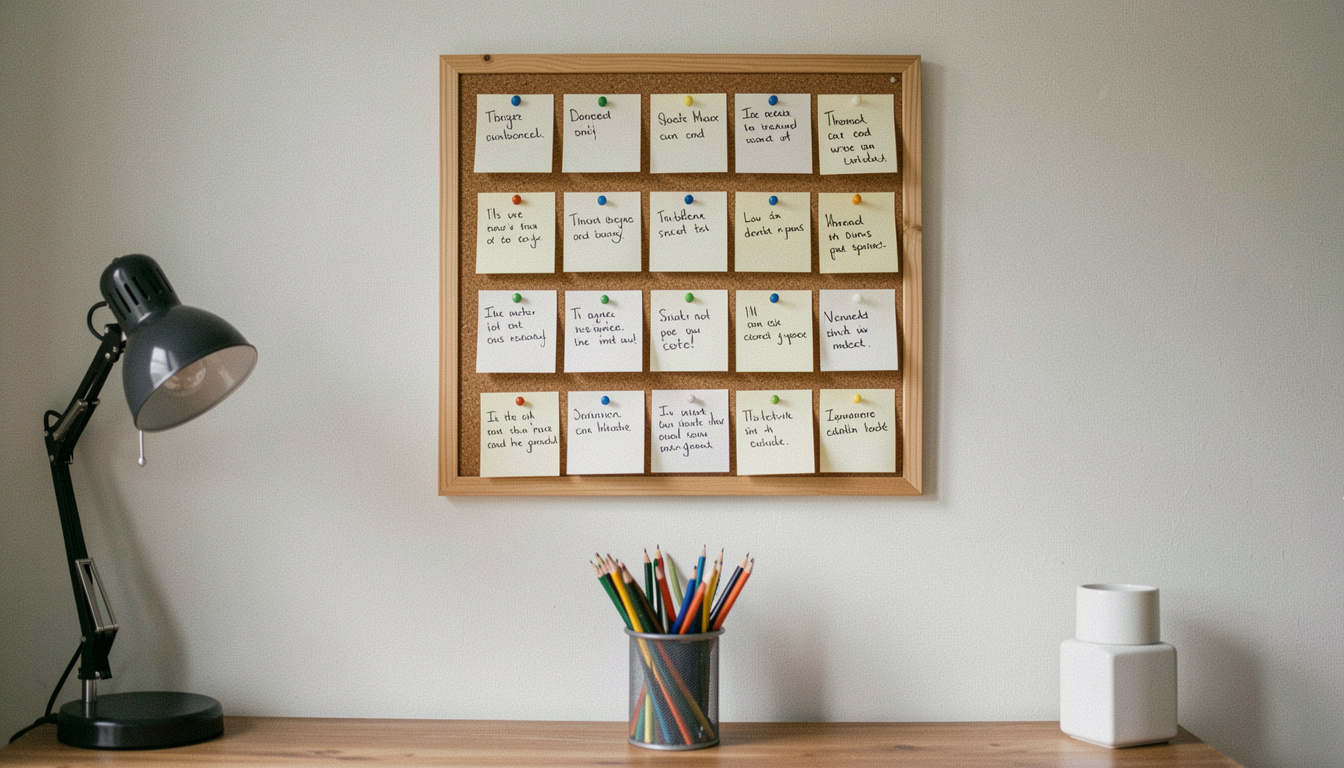
We keep the habit for about two weeks and write down, on paper, what happened. Not how it felt in general terms: which days it happened on, which version happened, and what stopped it on the days it did not. The record is a line per day and takes under a minute, which is the same light form of tracking argued for in the entry on keeping a record without defending a streak.
Two weeks is a short experiment and we say so in the entries. It is long enough to show which version of a habit survives a bad day and far too short to show anything else. That limit is why the closing section of most entries is called what we noticed rather than what we found.
Two weeks is long enough to show which version of a habit survives a bad day, and far too short to show anything else.
The shape of an entry
Most entries run through the same four questions. What the habit actually is, in practice rather than in principle. What account is usually given for it, reported as an account rather than asserted as a fact. What gets in its way, which is usually logistics rather than willpower. And what the smallest workable version is, the one that still happens on the worst day of the fortnight.
That last question is the one the whole magazine keeps returning to, and it has its own entry in the piece on why the small version is the one that lasts. It is also why entries end with a plain report rather than a recommendation: which version survived, which did not, and on what sort of day it failed.
What we do not claim
We do not put figures on things we have not counted, and we have counted very little. When an explanation is in general circulation, we report it as such and leave it there. When a habit appeared to help, we say what changed in the room, the day or the notebook, rather than making a claim about a body.
We also try to keep the scale honest. A magazine about small habits that promised large outcomes would be arguing against itself. What is on offer here is a lamp, ten minutes, a shelf, a chair by a window, and the observation that these repeat, which is the only real argument this site makes. The best illustration of it is probably the entry on clearing a single surface.
Read next
What the magazine is for, and how the seven sections divide up an ordinary day, is on the page about what this magazine is for.
The method described above is applied most directly in the piece on keeping a record without a total.
The paper notebook that carries the fortnight of notes is itself a habit, described in the entry on writing three lines most evenings.