A Habit of Noticing Tension Before It Builds
Held tension has an unhelpful property: it stops being noticeable long before it stops being present. Shoulders raised at ten in the morning are simply where the shoulders are by noon. The habit here is not relaxation. It is a short, repeated check, done often enough that the holding is caught while it is still recent.
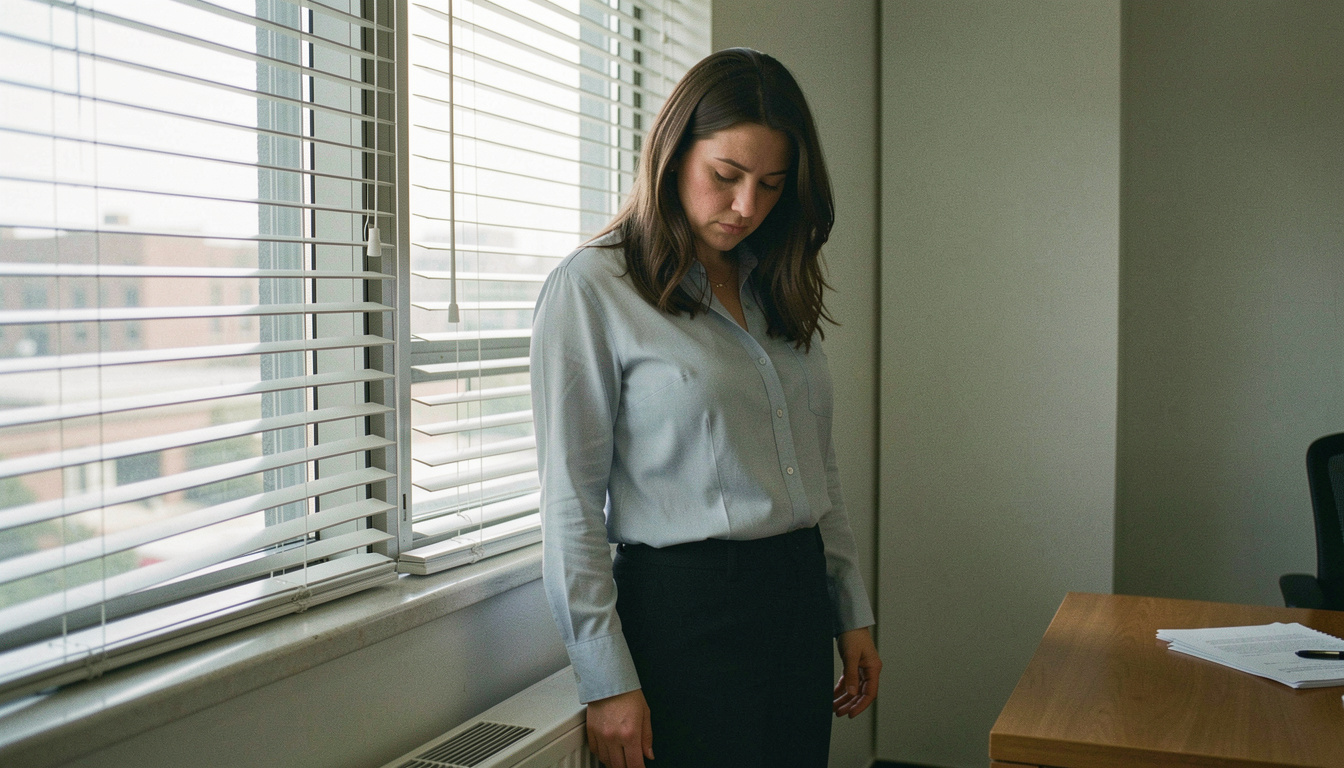
The tension you stop feeling
The body is efficient about sensation. A steady, unchanging signal fades from attention, which is why nobody notices their own watch strap. The same efficiency applies to a shoulder that has been held slightly up since the first difficult email of the morning.
By late afternoon, what is felt is not the holding but the result of it, and by then the correction is a stretch rather than a release. The advantage of catching it early is simply that early tension lets go, and does so immediately, with no technique required at all.
Nothing in this entry is a diagnosis of anything, and it is not a treatment. It is a noticing habit, in the same family as looking up from a screen or checking that your feet are flat on the floor.
Three places to check
Three places carry most of it, and they are easy to check without moving from a chair.
| Place | What it usually looks like | The release |
|---|---|---|
| Shoulders | Raised a centimetre or two towards the ears | Let them drop on an out breath |
| Jaw | Teeth touching, or clenched | Let the lower jaw hang slightly |
| Hands | Gripping a mouse or a pen with no need to | Open the hand flat for two seconds |
Some people will find it is the brow instead, or the stomach, or the toes curled inside a shoe. The three above are simply the ones that came up most in our own notes. Finding your own is part of the habit and takes about a week.
Tension stops being noticeable long before it stops being present.
The cues that work
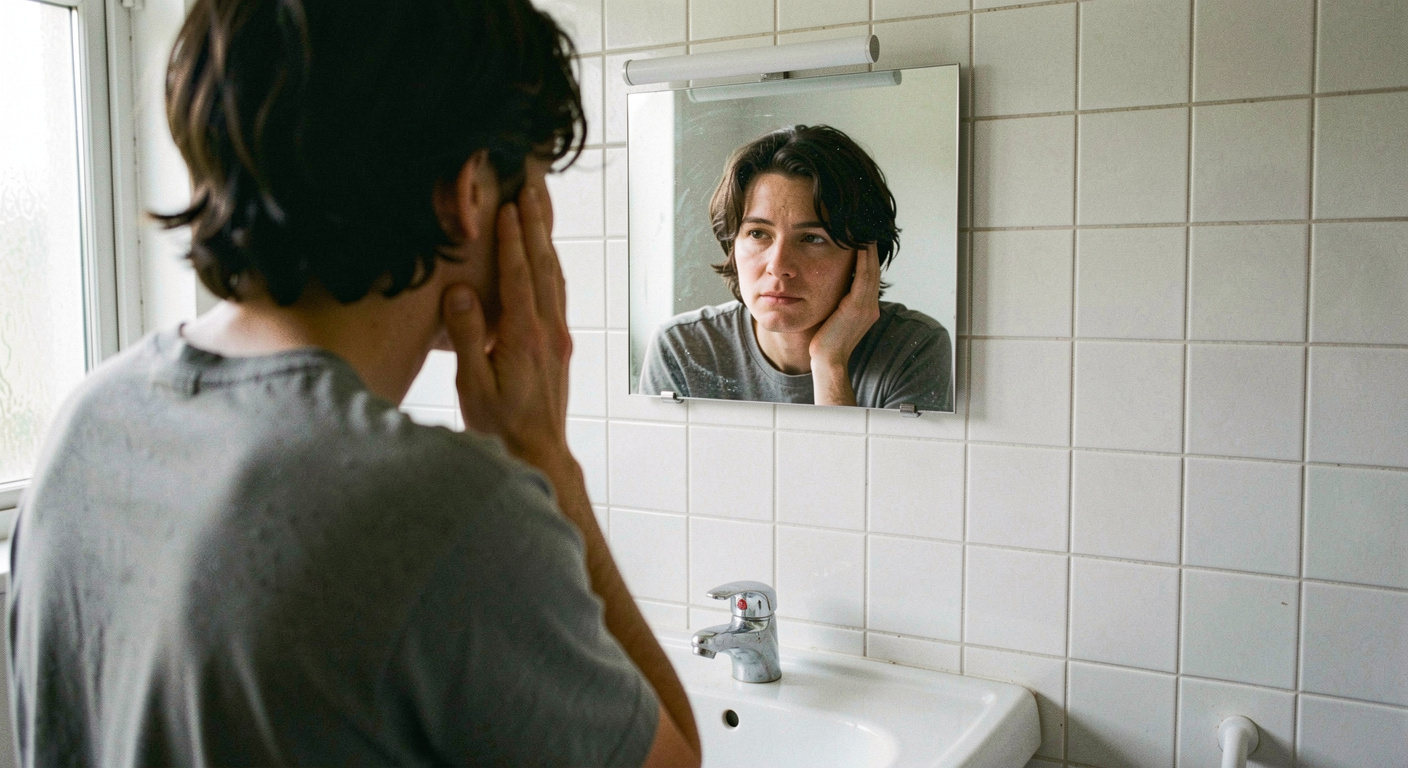
A check that depends on remembering will not happen. It has to hang on something that already occurs several times a day, and the best cues are physical rather than scheduled.
The ones that worked for us: standing up from the desk, which happens anyway; the kettle going on, which is the same cue used for the water glass in the entry on cues rather than quotas; sitting down after a meeting; and passing a mirror, which is unavoidable and requires no memory at all.
What did not work was a reminder on a phone. It arrived at the wrong moments, it was dismissed without being read within about four days, and it added a notification to a day we are generally trying to remove notifications from, as argued in the entry on an evening that belongs to rest.
A change of posture is a particularly good cue because it is already a break in the day. Anyone alternating between standing and sitting, in the way described in the entry on that rhythm, has three or four natural checkpoints built in without adding anything.
Letting go is a skill
The noticing half is easy. The releasing half is less obvious than it sounds, because a shoulder that has been held for two hours does not drop simply because it has been observed.
Two things helped. The first is exaggeration: raise the shoulders deliberately for two seconds, then let them go. The contrast makes the release happen by itself, and it works on the jaw and the hands as well. The second is attaching the release to an out breath, which gives it a moment to happen in rather than leaving it as an instruction.
That second one connects directly to the counted breathing habit, which is the same tool applied to an acute moment rather than to a slow accumulation. It is described in the entry on an evenly counted breath, and the two habits work well together: the check catches what has built, the breath handles what is arriving.
What we noticed
Over a fortnight the shoulders were the most consistent finding by a wide margin, and the mirror was the most reliable cue. The jaw was the most surprising: noticed only three or four times in the whole period, and every one of those was during a specific kind of task, the sort with an unresolved conversation attached to it.
The hands were the easiest to correct and the quickest to return. Whatever a hand is doing on a mouse, it goes back to doing it within a couple of minutes, which suggests this is a habit of frequent small checks rather than one good release a day.
The entry that pairs with this one is the notebook. Physical tension and the same two unresolved items turning up eleven evenings in a row are often the same information arriving by different routes, which is the case made in the piece on a notebook kept small.
Read next
The acute version of the same tool, for the minute before something difficult, is the counted breathing entry.
Held shoulders are sometimes a furniture problem rather than a mood one, which is why the piece on setting a desk up so it lasts a full day is worth reading alongside this.
For the physical release between meetings, the four movements in the stretch routine need nothing but a doorway.
If the same tension keeps arriving at the same hour, writing it down is the cheapest way to see the pattern: the entry on three lines written each evening.