Protecting an Evening From the Rest of the Day
A working day used to end when a building was left. For a great many people it now ends when they decide it does, which in practice means it does not end at all: it thins out over the evening, still checking, still half available, until it turns into going to bed.
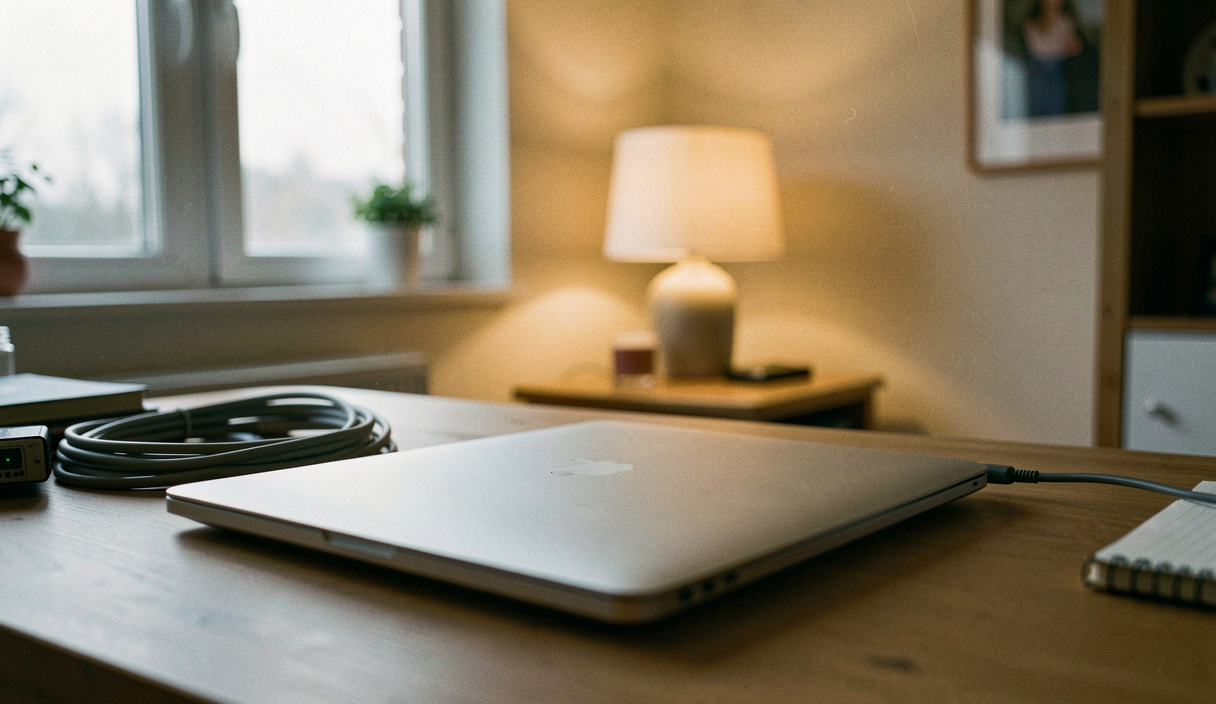
The day with no edge
The specific loss here is not hours, it is the edge. An evening spent half working is not restful and it is not productive either, and the person having it usually could not say afterwards which it was. That ambiguity is the thing worth removing, and it can be removed without changing how much work gets done.
It is worth being honest that this is not always available. Shift work, care responsibilities, a job with genuine on call obligations, a business that is yours. For a lot of people the boundary is at best partial. What follows is about making whatever line exists a real one rather than an intention.
A line needs an object
Deciding to stop work at seven does nothing. Doing something physical at seven does quite a lot. The difference is that an intention has to be repeated every evening and an object only has to be moved once.
| Move | What it does | Cost |
|---|---|---|
| Close the laptop lid, push the chair in | The desk stops looking like an open invitation | Five seconds |
| Work bag closed and by the door | Tomorrow is packed, so tonight is not for it | A minute |
| Work laptop into a drawer or a bag | Reopening requires a decision | Ten seconds |
| One lamp on, ceiling light off | The room changes state | Two seconds |
The last of those is doing double duty. It is also the first step of the evening sequence described in the piece on a routine a tired person can still recognise, which means one switch is closing the working day and opening the evening at the same time. That kind of overlap is the reason the seven sections of this magazine keep running into each other.
For anyone working in the same room they live in, the object question becomes harder and more important. A desk that cannot be left has to be closed in some other way: a cloth over the screen, the chair turned around, the monitor unplugged. It sounds theatrical and it works, because the room genuinely does look different afterwards.
The notifications question
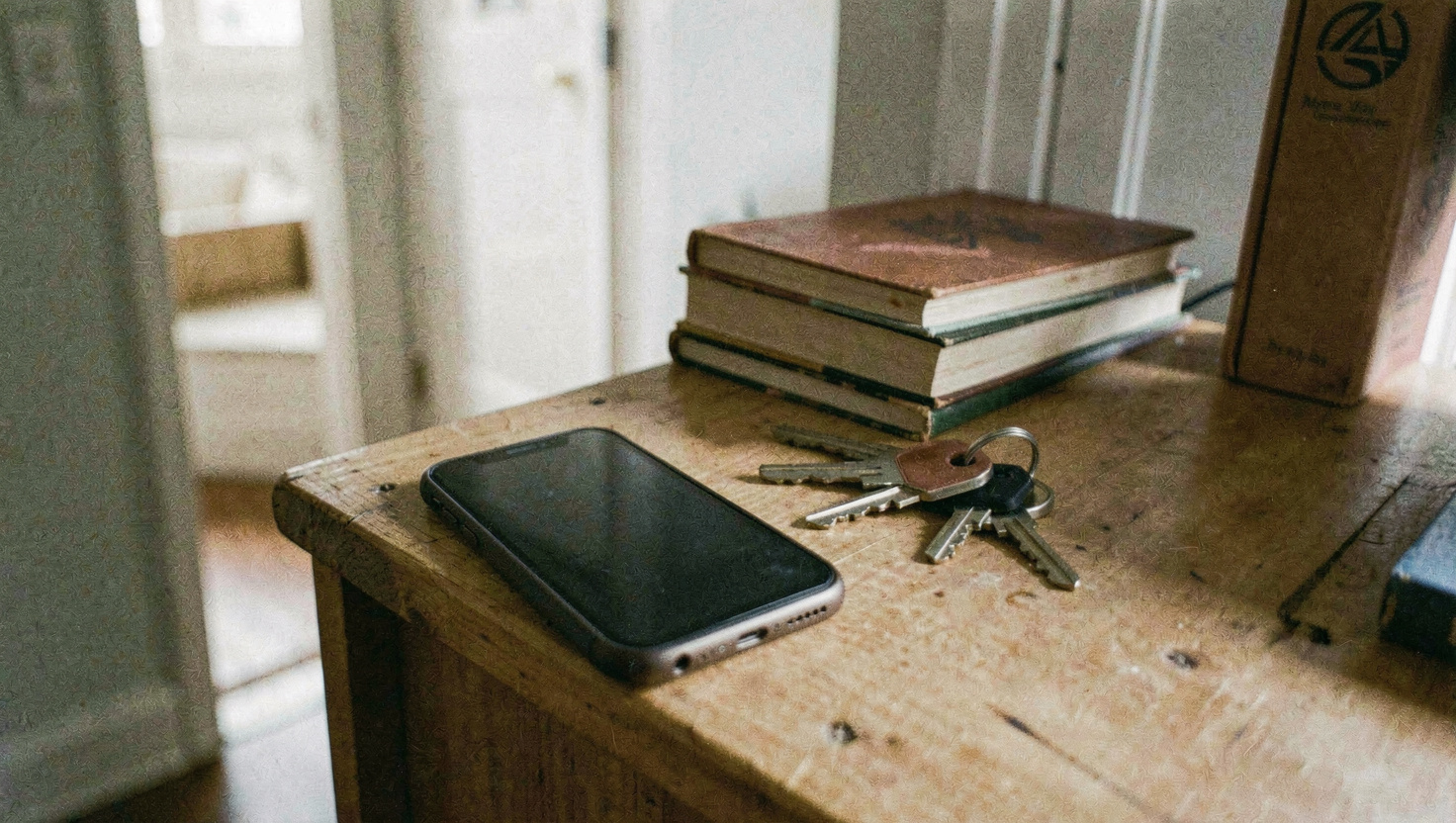
A closed laptop and a live phone is not a boundary, it is a change of screen size. Work now arrives by message, and each arriving message is a small piece of unfinished business that reopens the day for as long as it takes to read it and rather longer than that to stop thinking about it.
The version that works is scheduled rather than manual: a rule that silences work applications after a certain hour, set up once, that does not depend on anybody remembering to do it in the moment. Manual silencing fails on exactly the evenings it is most needed, which by now is a familiar sentence.
The harder half of this is social rather than technical. If colleagues have learned that messages get answered at ten at night, they will keep sending them at ten at night, and no phone setting changes that. What changes it is the answering happening the next morning, consistently, for a couple of weeks. That is uncomfortable and it is the actual work.
An evening spent half working is neither restful nor productive, and afterwards nobody can say which it was.
What the evening is for
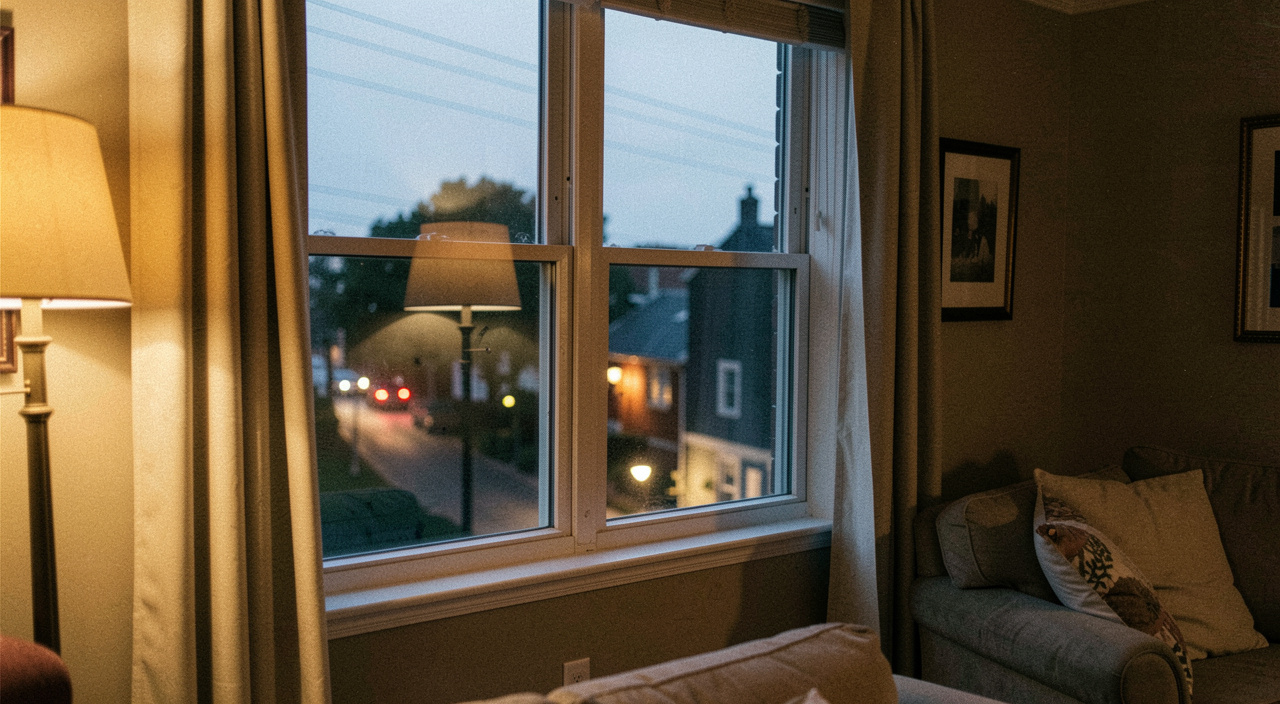
A protected evening that has nothing in it will be refilled with work, or with a phone, within about three days. This is the same finding as in the entry on putting screens away: an emptied hour needs a shape.
The shapes that worked were unremarkable and physical. A meal eaten at a table rather than at a desk, which is a habit in itself and is described in the entry on eating more slowly. A short walk, ideally with someone. A chair with a lamp beside it and something to read. Nothing that required booking, and nothing that could fail.
When the line cannot hold
Some evenings will have work in them. The useful distinction is between an evening that has a known piece of work in it and an evening that is vaguely available. The first is a normal, finite thing. The second is the one that costs.
So the workable rule is not that work never happens after seven. It is that if it does, it is named, bounded and finished, and then the line is drawn afterwards rather than skipped. Twenty minutes of a specific task at nine is a different evening from four hours of intermittent checking.
What we noticed
Across a fortnight the physical moves held far better than the intentions. Closing the lid and pushing the chair in happened on twelve evenings out of fourteen, because it takes five seconds and is done at the moment of standing up. The scheduled silencing of work applications ran every evening, because it required nothing of anybody after the first setup.
What failed was the ambition to have nothing at all after seven. That lasted three evenings. What replaced it, and held, was the bounded version: one named task if there had to be one, then the lamp, then the evening.
The other observation, offered without any claim beyond our own notes, is that the evenings with a real edge were the ones where the following morning started better. Whether that is about sleep, or about not having spent the evening in a low grade state of readiness, we cannot say. The morning end of the same question is taken up in the entry on deciding a floor in advance.
Read next
The line at the end of the working day is also the first step of the evening sequence, set out in our entry on what an evening sequence contains.
For the transition itself, the minute in the car or on the stairs, see the piece on a one minute breathing habit.
A protected evening needs somewhere to be spent, which is the subject of our entry on a quiet corner in a small flat.
The most reliable thing to put in a defended evening is a meal eaten slowly at a table: the piece on unhurried meals.